
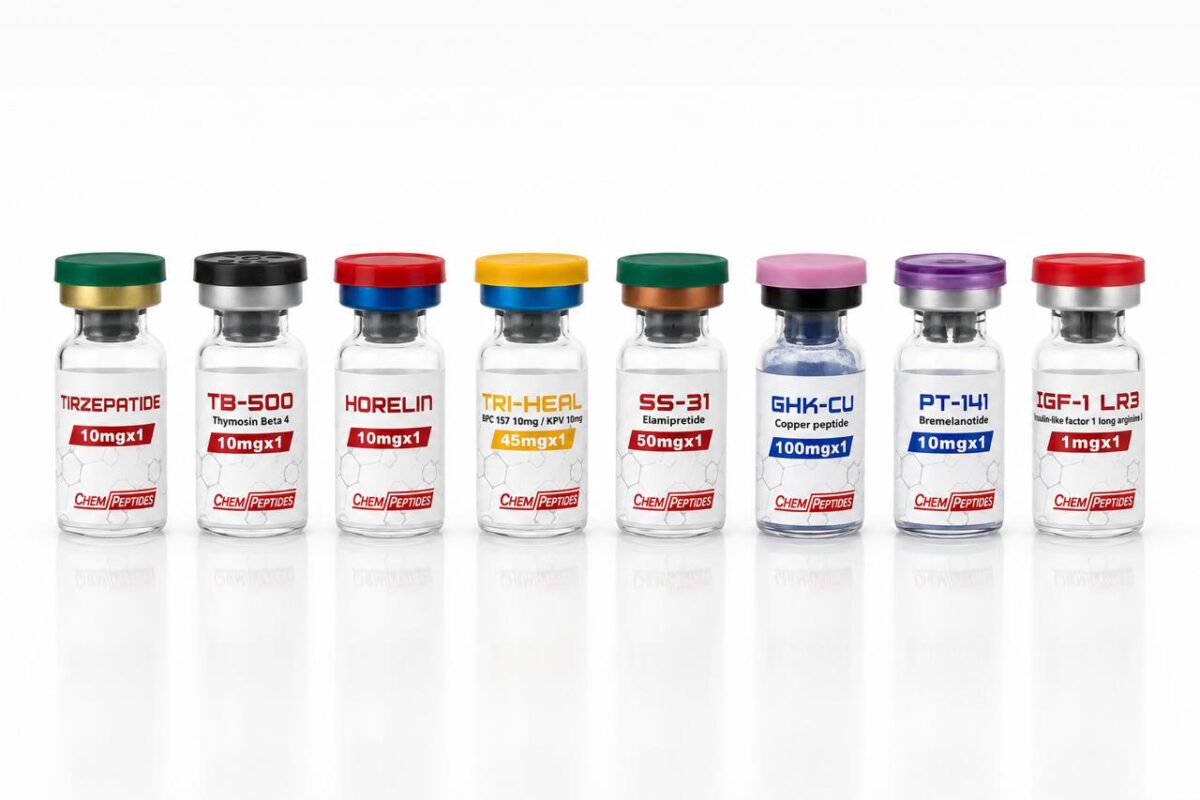
PT-141 (Bremelanotide) en Melanotan II (MT-II) zijn structureel verwante synthetische peptiden die de melanocortine receptorfamilie activeren. Ze delen een gemeenschappelijke ruggengraat maar verschillen aan de C-terminus, en die kleine structurele verandering brengt betekenisvol verschillende onderzoeksprofielen voort. Dit artikel vergelijkt ze op receptorselectiviteit, onderzoekstoepassingen en waarneembare effecten.
Gedeelde structuur
Beide peptiden zijn gebaseerd op de α-MSH (alpha-melanocyte stimulating hormone) heptapeptide kern met modificaties voor stabiliteit:
- PT-141: Ac-Nle-cyclo(Asp-His-D-Phe-Arg-Trp-Lys)-OH
- Melanotan II: Ac-Nle-cyclo(Asp-His-D-Phe-Arg-Trp-Lys)-NH₂
Het verschil is een enkele C-terminale modificatie: PT-141 heeft een vrij carbonzuur (-OH); Melanotan II heeft een amide (-NH₂).
Hoe de C-terminale verandering de selectiviteit verschuift
Het C-terminale amide op Melanotan II lijkt de MC1R-binding te bevorderen (wat melanogenese/pigmentatie aandrijft), terwijl het vrije zuur op PT-141 de MC1R-affiniteit vermindert en het activiteitsprofiel verschuift naar centrale MC4R-routes. De structurele verandering is klein maar het gevolg voor de receptorbinding is significant.
Receptorprofiel naast elkaar
| Receptor | MT-II potentie | PT-141 potentie |
|---|---|---|
| MC1R (melanogenese) | Hoog | Laag |
| MC3R (energie, ontsteking) | Hoog | Matig |
| MC4R (eetlust, seksueel) | Hoog | Hoog (selectieve focus) |
| MC5R (exocrien, talg) | Hoog | Matig |
Waarneembare effecten in onderzoek
| Effect | MT-II | PT-141 |
|---|---|---|
| Huidpigmentatie | Uitgesproken | Minimaal |
| Eetlustonderdrukking | Sterk | Mild |
| Activatie van seksuele respons | Sterk | Sterk |
| Spontane erectie (onderzoeksmodellen) | Ja | Ja |
| Misselijkheid | Vaak bij hogere doses | Vaak (~40% in trials) |
| Bloeddrukstijging | Mild | Mild tot matig |
Onderzoekstoepassingen: MT-II
- Onderzoek naar de melanogeneseroute (UV-onafhankelijke pigmentatie)
- Farmacologiestudies van pan-MC receptoren
- Modellen voor eetlustregulatie
- Fotoprotectieonderzoek (de oorspronkelijke ontwikkelingsinvalshoek)
Onderzoekstoepassingen: PT-141
- Selectieve MC4R-farmacologie
- Studies naar seksuele-responscircuits in het centrale zenuwstelsel
- Klinisch onderzoek naar hypoactieve seksuele verlangenstoornis
- Autonome regulatie via centrale MC4R
Klinische vertaling
PT-141 bereikte in 2019 goedkeuring door de regelgevende instanties (Vyleesi voor premenopauzale HSDD bij vrouwen). Melanotan II is een peptide gebleven dat uitsluitend voor onderzoek is: het niet-selectieve profiel zorgde ervoor dat klinische toepassingen gefragmenteerd raakten, en het pigmentatie-effect (oorspronkelijk het ontwikkelingsdoel) werd overschaduwd door veiligheidszorgen rond de ontwikkeling van atypische moedervlekken bij sommige onderzoekssubjecten.
Waarom selectiviteit belangrijk is in deze familie
De melanocortine receptoren hebben een brede weefseldistributie. Ze allemaal tegelijk activeren brengt een complex effectprofiel voort dat moeilijk te controleren is in klinische settings. Selectieve MC4R-targeting (PT-141) isoleert één specifieke route, waardoor het voorspellen van bijwerkingen beter beheersbaar wordt. De verschuiving in deze peptidefamilie is richting meer selectieve verbindingen.
Stabiliteit en reconstitutie
Beide peptiden worden gelyofiliseerd geleverd en reconstitueren in bacteriostatisch water op 1-2 mg/mL. De cyclische ruggengraat van beide verleent goede stabiliteit. Gekoeld gereconstitueerd materiaal behoudt zijn potentie gedurende ongeveer 4 weken. Bescherm tegen licht om fotodegradatie van tryptofaan te voorkomen.
Farmacokinetische vergelijking
| Kenmerk | MT-II | PT-141 |
|---|---|---|
| Subcutane biologische beschikbaarheid | ~80% | ~80% |
| Plasma halfwaardetijd | ~2 uur | ~2 uur |
| Aanvang | ~30 min | ~45 min |
| Duur | ~4-6 uur | ~4-6 uur |
Chempeptides levert beide peptiden met batchspecifieke CoA: zie de catalogus, ons MT-II artikel en ons PT-141 artikel voor verbindingsspecifieke details.
Uitsluitend voor onderzoeksdoeleinden.
Beide verbindingen uit deze vergelijking zijn bij Chempeptides verkrijgbaar: PT-141 10mg en Melanotan II 10mg. Een overzicht met prijs per milligram staat op PT-141 kopen.
Gerelateerd onderzoek
- PT-141 (Bremelanotide): Selectief MC4R Onderzoek
- Melanotan II Onderzoek: Melanocortine Receptor Routes in Kaart
- Melanotan II onderzoek: tanning, libido en eetlust via melanocortine receptoren
- Ipamorelin Onderzoek: Selectieve GH Puls Mechanica
Research disclaimer▾
Alle informatie op deze pagina is bedoeld voor laboratoriumonderzoek en in-vitro studies. Geen humane consumptie. Geen medische claims. Producten zijn niet goedgekeurd door EMA of FDA voor therapeutisch gebruik.
Onderzoeksmateriaal bij dit onderwerp
De peptiden die in huid- en collageenonderzoek het meest worden gebruikt:
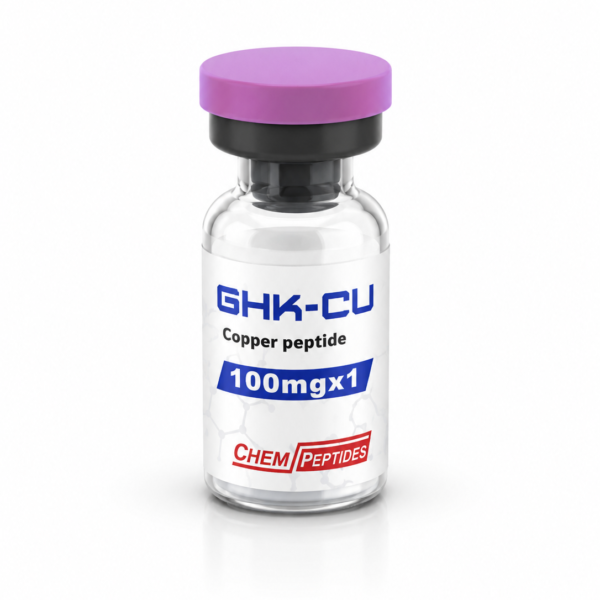 GHK-Cu 100mg€ 90,00
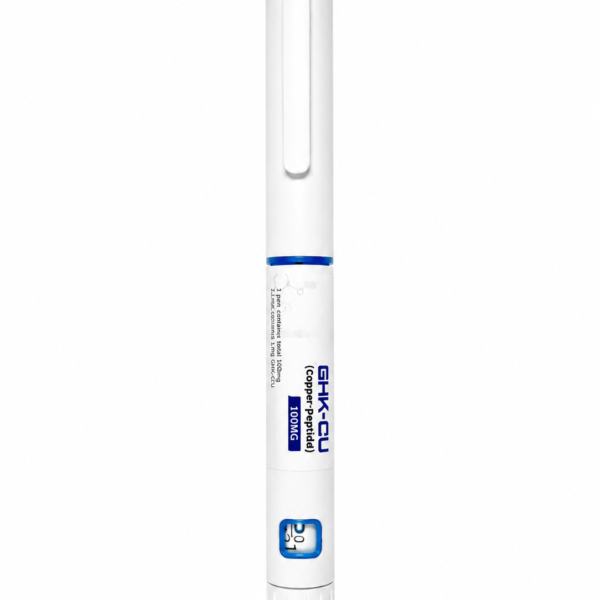 GHK-Cu 100mg Pre-filled Pen€ 110,00
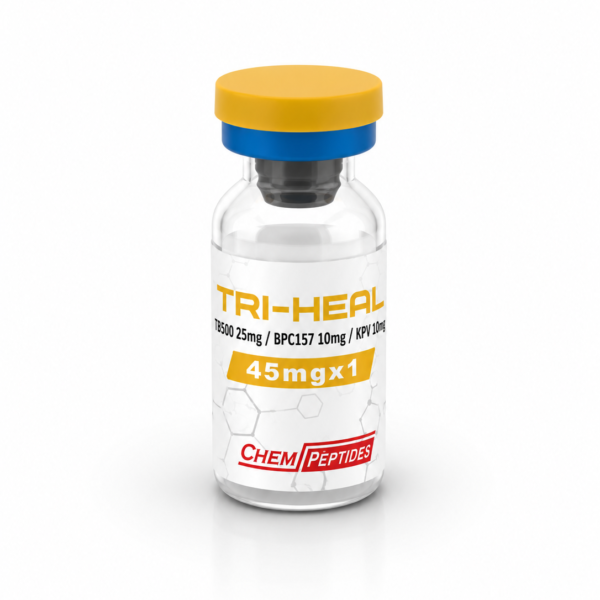 Tri-Heal TB-500 + BPC-157 + KPV 25/10/10mg€ 140,00
Betalen met iDEAL of Wero. Verzending in discrete verpakking vanuit Nederland. Uitsluitend voor laboratorium- en onderzoeksdoeleinden.