
PT-141 (Bremelanotide) is een synthetische heptapeptide analoog afgeleid van Melanotan II. In tegenstelling tot het bredere MT-II profiel dat meerdere melanocortine receptoren activeert, is PT-141 ontworpen met een focus op MC4R activiteit in routes van het centrale zenuwstelsel. De farmacologie is onderscheidend en het klinische onderzoeksdossier is ongewoon: het werd het eerste MC4R-gerichte therapeuticum dat werd goedgekeurd voor hypoactieve seksuele verlangenstoornis. Dit artikel brengt het onderzoek in kaart.
Structuur en selectiviteit
PT-141 sequentie: Ac-Nle-cyclo(Asp-His-D-Phe-Arg-Trp-Lys)-OH. Het structurele verschil met Melanotan II is de verwijdering van het C-terminale amide. Deze subtiele verandering verschuift het receptorprofiel: PT-141 activeert MC4R selectiever in centrale routes en vertoont tegelijk verminderde melanogene activiteit (MC1R-gemedieerde huidpigmentatie).
Mechanisme: centrale MC4R activatie
MC4R komt in hoge dichtheid tot expressie in de hypothalamus, de hersenstam en limbische regio’s. Activatie moduleert:
- Routes van seksuele opwinding (specifiek de mediale preoptische area en de nucleus paraventricularis)
- Eetlustsignalering (minder relevant voor het toepassingsgebied van PT-141)
- Autonome tonus en cardiovasculaire regulatie
PT-141 brengt effecten op de seksuele respons tot stand via routes van het centrale zenuwstelsel in plaats van via perifere vasculaire werking, wat het mechanistisch onderscheidt van PDE5-remmers die inwerken op de penisvasculatuur.
Klinisch onderzoeksdossier: hypoactieve seksuele verlangenstoornis
Het RECONNECT onderzoeksprogramma (Kingsberg et al., 2019) onderzocht PT-141 bij premenopauzale vrouwen met hypoactieve seksuele verlangenstoornis. De resultaten toonden een statistisch significante verbetering in verlangenscores vergeleken met placebo over 24 weken. De FDA keurde bremelanotide in 2019 goed onder de merknaam Vyleesi voor deze specifieke indicatie.
Werkingsmechanisme vs PDE5-remmers
| Stofklasse | Mechanisme | Aangrijpingspunt |
|---|---|---|
| PDE5-remmers (sildenafil) | Vasculaire cGMP-versterking | Perifeer (penisvasculatuur) |
| PT-141 / Bremelanotide | MC4R-agonisme | Centraal (hypothalamus, hersenstam) |
Het mechanistische onderscheid betekent dat PT-141 functioneert in onderzoekspopulaties waar PDE5-remmers ontoereikend of gecontra-indiceerd zijn.
Bijwerkingenprofiel in onderzoeken
De meest gerapporteerde bijwerkingen in klinische onderzoeken:
- Misselijkheid (~40% van de proefpersonen, mild tot matig)
- Blozen
- Hoofdpijn
- Voorbijgaande bloeddrukstijging (doorgaans <10 mmHg, dosisafhankelijk)
De voorbijgaande bloeddrukstijging is een opvallend mechanisme-gerelateerd effect: MC4R-activatie in autonome centra beïnvloedt de vaattonus.
PT-141 vs Melanotan II
De twee peptiden delen dezelfde melanocortine familie maar met onderscheidende profielen:
| Kenmerk | PT-141 | Melanotan II |
|---|---|---|
| MC1R-activatie | Laag | Hoog (melanogenese) |
| MC4R-activatie | Hoog (selectieve focus) | Hoog (niet-selectief) |
| MC3R/MC5R | Lager | Hoger |
| Huidpigmentatie | Minimaal | Uitgesproken |
Farmacokinetisch profiel
- Subcutane biologische beschikbaarheid: ~80%
- Plasma halfwaardetijd: ~2 uur
- Aanvang van effect: ~45 minuten tot piek
- Duur van centraal effect: ~4-6 uur
Stabiliteit en reconstitutie
PT-141 wordt gelyofiliseerd geleverd. Reconstitutie in bacteriostatisch water op 1-2 mg/mL is standaard. De cyclische ruggengraat biedt goede stabiliteit. Gekoeld gereconstitueerd PT-141 behoudt zijn potentie gedurende ongeveer 4 weken.
Onderzoekstoepassingen
- MC4R route-farmacologie
- Studies naar seksuele-responscircuits in het centrale zenuwstelsel
- Onderzoek naar receptorspecificiteit binnen de melanocortine familie
- Modellen voor autonome regulatie
Chempeptides levert HPLC-geverifieerd PT-141 met batch CoA: zie de catalogus en ons Melanotan II artikel voor de bredere melanocortine familie.
Uitsluitend voor onderzoeksdoeleinden.
Voor eigen onderzoek naar MC4R-signalering is PT-141 10mg bij Chempeptides verkrijgbaar, met certificaat per batch. Meer over het product en de verschillen met Melanotan II op PT-141 kopen.
Gerelateerd onderzoek
- PT-141 vs Melanotan II: Selectieve vs Pan-Melanocortine Activatie
- Melanotan II onderzoek: tanning, libido en eetlust via melanocortine receptoren
- Melanotan II Onderzoek: Melanocortine Receptor Routes in Kaart
- Ipamorelin Onderzoek: Selectieve GH Puls Mechanica
Research disclaimer▾
Alle informatie op deze pagina is bedoeld voor laboratoriumonderzoek en in-vitro studies. Geen humane consumptie. Geen medische claims. Producten zijn niet goedgekeurd door EMA of FDA voor therapeutisch gebruik.
Onderzoeksmateriaal bij dit onderwerp
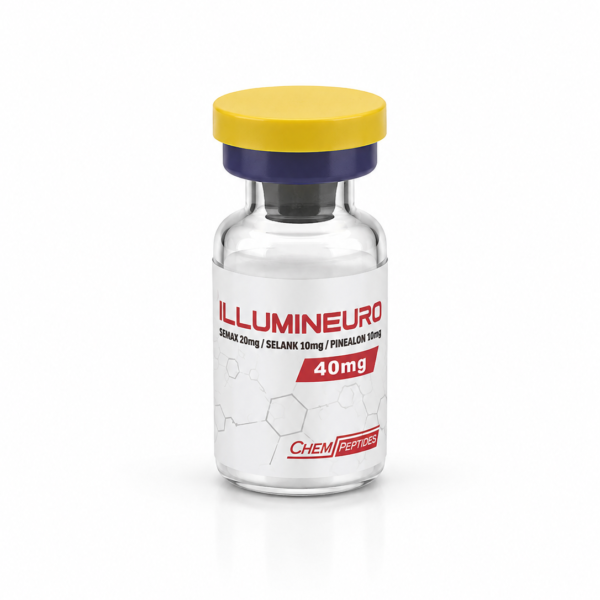
De peptiden die in neurologisch en cognitief onderzoek het meest worden gebruikt:
Betalen met iDEAL of Wero. Verzending in discrete verpakking vanuit Nederland. Uitsluitend voor laboratorium- en onderzoeksdoeleinden.