
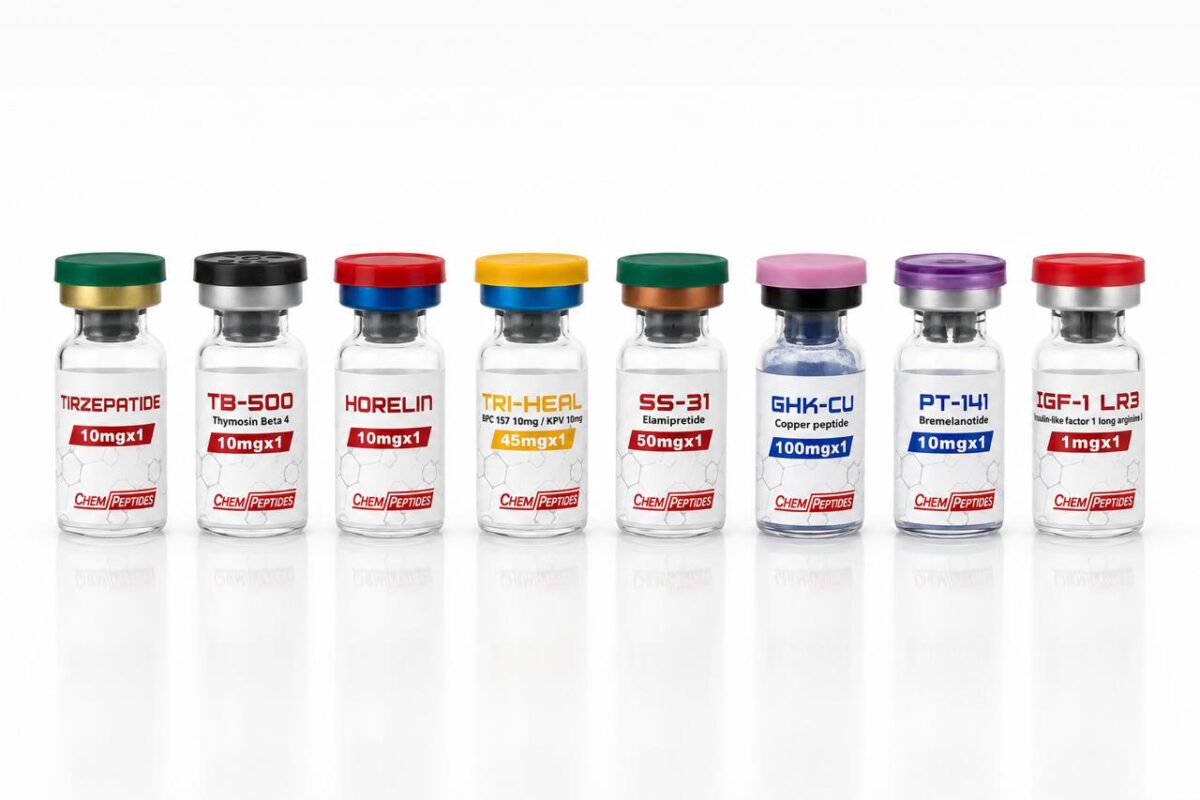
Thymosin Alpha-1 (Tα1) is een geacetyleerd peptide van 28 aminozuren dat uit thymusweefsel is geïsoleerd en sinds het einde van de jaren zeventig wordt gesynthetiseerd. Het is een van de klinisch meest bestudeerde immunomodulerende peptiden: het wordt als Zadaxin in meer dan dertig landen gebruikt voor de aanvullende behandeling van chronische hepatitis B en bepaalde kankers. Dit artikel brengt de onderzoeksliteratuur over mechanisme en immuunmodulatie in kaart.
Herkomst en sequentie
Tα1 is N-geacetyleerd aan de alfa-aminogroep van de N-terminale serine. De volledige sequentie: N-acetyl-Ser-Asp-Ala-Ala-Val-Asp-Thr-Ser-Ser-Glu-Ile-Thr-Thr-Lys-Asp-Leu-Lys-Glu-Lys-Lys-Glu-Val-Val-Glu-Glu-Ala-Glu-Asn. De acetylering verhoogt de enzymatische stabiliteit.
Mechanisme: TLR-activatie
De meest geciteerde mechanistische bevinding is dat Tα1 Toll-like receptor 9 (TLR9) activeert op plasmacytoïde dendritische cellen en andere antigeenpresenterende cellen. TLR9-activatie zet een type I-interferonrespons in gang, die vervolgens cascadeert naar:
- Verbeterde rijping van dendritische cellen en antigeenpresentatie
- Verhoogde productie van Th1-cytokinen (IL-2, IFN-γ)
- Verbeterde activiteit van natural killer-cellen
- Gemoduleerde functie van regulerende T-cellen
Onderzoek naar chronische hepatitis B
Het grootste geheel aan klinisch onderzoek naar Tα1 betreft chronische hepatitis B. Meta-analyses van gerandomiseerde gecontroleerde onderzoeken (Yang et al., 2008) rapporteren verbeterde seroconversiepercentages en een verlaagde virale lading wanneer Tα1 wordt toegevoegd aan standaard antivirale therapie. Het effect is bescheiden maar reproduceerbaar over meerdere cohorten.
Onderzoek naar kankeraanvulling
Tα1 is bestudeerd als immuunaanvulling bij hepatocellulair carcinoom, maligne melanoom en niet-kleincellig longcarcinoom. Het onderzoekssignaal is het meest consistent bij hepatocellulair carcinoom na resectie (Zhang et al., 2012), waar aanvullende Tα1 de recidiefpercentages in onderzoekscohorten verlaagde.
Sepsisonderzoek
Het ETASS-onderzoek (Wu et al., 2013) onderzocht Tα1 bij ernstige sepsis. De resultaten waren wisselend: het primaire sterfte-eindpunt werd niet gehaald, maar subgroepanalyses suggereerden voordeel bij immuungesupprimeerde sepsisfenotypen. Latere onderzoeken zijn deze niche blijven verkennen.
Onderzoeksperiode COVID-19
Tijdens de COVID-19-pandemie onderzochten meerdere onderzoeksgroepen (met name in Italië en China) Tα1 als immunomodulerende aanvulling. De gepubliceerde cohorten waren klein, maar de signalen omvatten verbeterde lymfocytenaantallen en verlaagde sterfte in sommige subgroepen. Dit onderzoek wordt nog steeds samengevoegd.
Aangeboren versus adaptieve immuuneffecten
| Immuunarm | Effect van Tα1 in onderzoek |
|---|---|
| Aangeboren | Verhoogde activiteit van NK-cellen, rijping van dendritische cellen |
| Adaptief (cellulair) | Th1-verschuiving, verhoogde CD4+- en CD8+-proliferatie |
| Adaptief (humoraal) | Bescheiden versterking van de antilichaamrespons |
| Regulerend | Treg-modulatie in auto-immuunonderzoeksmodellen |
Farmacokinetisch profiel
- Plasmahalfwaardetijd: ~2 uur na subcutane toediening
- Uitscheiding: hoofdzakelijk renaal
- Standaard onderzoeksdosering: 1,6 mg subcutaan tweemaal per week
Stabiliteit en reconstitutie
Tα1 wordt gelyofiliseerd geleverd. Reconstitutie in bacteriostatisch water bij 1 tot 2 mg/mL is standaard. Gekoeld gereconstitueerd Tα1 behoudt zijn werkzaamheid gedurende ongeveer 4 weken. De N-terminale acetylering biedt bescherming tegen afbraak door aminopeptidase.
Waar het onderzoek naartoe gaat
- Combinatie met immuuncheckpointremmers in oncologisch onderzoek
- Mechanismeonderzoek naar de specifieke werking van de TLR9-route
- Identificatie van sepsissubgroepen (welke patiënten reageren)
- Onderzoek naar vaccinadjuvans
Chempeptides levert HPLC-geverifieerd Thymosin Alpha-1 met batch-CoA: zie de catalogus.
Alleen voor onderzoeksdoeleinden.
Gerelateerd onderzoek
- TB-500 thymosin beta-4 voor spier en pees recovery: research grade gids
- TB-500: literatuuroverzicht van mechanismen voor weefselherstel
- BPC-157 versus TB-500: vergelijking van mechanismen voor weefselherstel
- BPC-157 en TB-500 stacken: wat in-vitro- en dieronderzoek daadwerkelijk laat zien
- Onderzoek naar het koperpeptide GHK-Cu: modellen voor huidherstel en wonden
Research disclaimer▾
Alle informatie op deze pagina is bedoeld voor laboratoriumonderzoek en in-vitro studies. Geen humane consumptie. Geen medische claims. Producten zijn niet goedgekeurd door EMA of FDA voor therapeutisch gebruik.
Onderzoeksmateriaal bij dit onderwerp
De peptiden die in weefselherstel-onderzoek het meest worden gebruikt:
 BPC 157 10mg€ 70,00
 TB500 10mg€ 70,00
 BPC-157 + TB-500 10/10mg€ 100,00
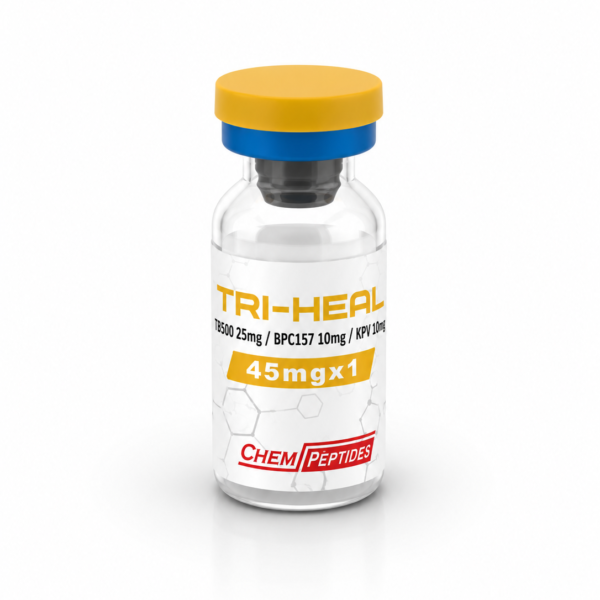 Tri-Heal TB-500 + BPC-157 + KPV 25/10/10mg€ 140,00
Betalen met iDEAL of Wero. Verzending in discrete verpakking vanuit Nederland. Uitsluitend voor laboratorium- en onderzoeksdoeleinden.