
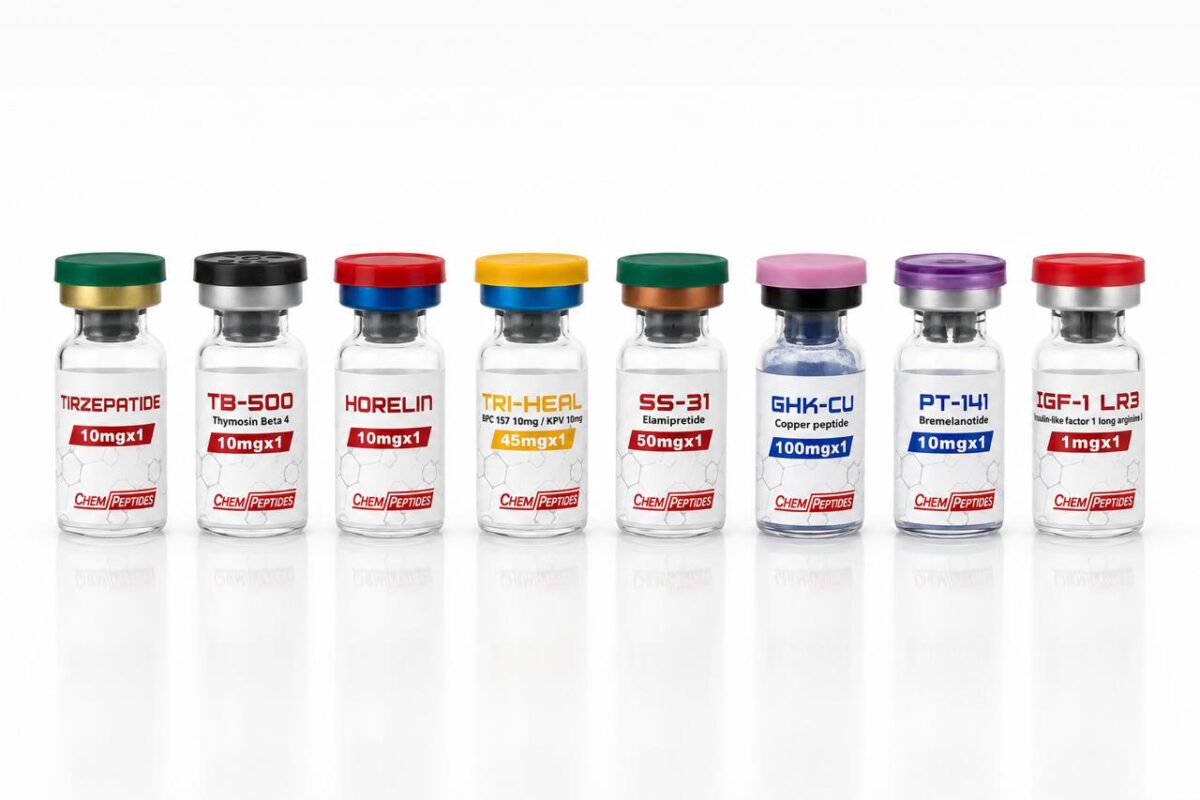
In een Echte Peptide-Onderzoeksworkflow: Wat Er Gebeurt Tussen Synthese en Publicatie
De term “peptide-onderzoek” wordt online losjes gebruikt. In een werkend laboratorium heeft die een specifieke betekenis: een keten van experimenten die begint met een flacon synthetische verbinding en, soms jaren later, eindigt met een manuscript in een peer-reviewed tijdschrift. Geen van dat werk houdt in dat materiaal wordt toegediend aan een menselijke of dierlijke proefpersoon zonder afzonderlijke, gereguleerde toeleveringsketens. Zo ziet een echte workflow eruit.
Stap 1: Sourcing en Identiteitsverificatie
Een research-grade peptide arriveert gelyofiliseerd in een verzegelde flacon met een Certificate of Analysis. Vóór elk experiment verifieert het laboratorium twee dingen onafhankelijk van elkaar:
- Identiteit via massaspectrometrie. De berekende monoisotopische massa van een peptide als BPC-157 (sequentie Gly-Glu-Pro-Pro-Pro-Gly-Lys-Pro-Ala-Asp-Asp-Ala-Gly-Leu-Val, formule C62H98N16O22) is 1418.71 Da. ESI-MS of MALDI-TOF moet die waarde binnen 0.5 Da opleveren.
- Zuiverheid via reversed-phase HPLC, doorgaans op een C18-kolom met een water/acetonitril + 0.1% TFA-gradiënt. Eén enkele piek met >99% oppervlak bij 214 nm is het standaard vrijgavecriterium.
Als beide controles slagen, wordt de verbinding geregistreerd in de laboratoriuminventaris met batchnummer, opslagtemperatuur en reconstitutie-instructies.
Stap 2: Reconstitutie en Stockbereiding
Vast peptide wordt opgelost in een oplosmiddel dat compatibel is met de geplande assay. Voor receptorbindingswerk in celkweek is dat meestal steriel bacteriostatisch water of PBS bij een hoge stockconcentratie (bijv. 1 mg/mL). Voor kalibratiestandaarden voor massaspectrometrie kan het water met 0.1% mierenzuur zijn. Aliquots worden onmiddellijk gemaakt om vries-dooicycli te vermijden. Stockflacons worden bewaard bij −20 °C of −80 °C, afhankelijk van het stabiliteitsprofiel van het peptide.
Stap 3: Het In-Vitro Experiment
Hier vindt het eigenlijke onderzoek plaats, en dit is wat gepubliceerde peptide-artikelen beschrijven. Voorbeelden uit de huidige literatuur:
- Receptorbindingsassays: HEK293-cellen die de GLP-1-receptor tot expressie brengen worden behandeld met seriële verdunningen van semaglutide of tirzepatide om EC50-waarden voor cAMP-productie te meten. Coskun et al. (Molecular Metabolism, 2018) karakteriseerden op deze manier de GLP-1R- en GIPR-potentie van tirzepatide voordat enige klinische studie begon.
- Celmigratie-assays: fibroblasten in scratch-wound platen blootgesteld aan BPC-157 of TB-500 bij concentraties van 1 nM tot 1 µM, elke 6 uur in beeld gebracht om de snelheid van wondsluiting te meten.
- Angiogenese-assays: HUVEC-cellen op Matrigel blootgesteld aan GHK-Cu om na 8 uur buisvormende eenheden te tellen, ter replicatie van het oorspronkelijke koper-peptide-onderzoek.
- Ontwikkeling van analytische methoden: farmacologische labs gebruiken research-grade peptidestandaarden om LC-MS/MS-detectiemethoden te valideren die later medicijnspiegels kwantificeren in gereguleerde bioanalyse.
Geen van deze experimenten vereist toediening aan mens of dier. Cellijnen en biochemische assays zijn het werkpaard van de vroege peptidefarmacologie.
Stap 4: Data-analyse en Replicatie
Elk experiment wordt herhaald, doorgaans in triplo, op onafhankelijke dagen. Statistische analyse volgt: dosis-responscurves gefit met vier-parameter logistische regressie, IC50– of EC50-waarden gerapporteerd met 95% betrouwbaarheidsintervallen. Een echt laboratorium publiceert geen enkele n=1-waarneming. Replicatie is de toegangsprijs.
Stap 5: Peer Review en Publicatie
Zodra er een coherente dataset bestaat, schrijft het laboratorium een manuscript en dient het in bij een tijdschrift: Peptides, Journal of Medicinal Chemistry, Bioorganic & Medicinal Chemistry Letters, European Journal of Pharmacology, of een van de onderwerpspecifieke bladen. Peer reviewers zullen de analytische karakterisering, het assay-ontwerp, de controles en de statistische verwerking nauwkeurig onderzoeken. Als de wetenschap deugt, komt het artikel in de literatuur terecht en draagt het bij aan wat gezamenlijk over dat peptide bekend is.
Waarom Dit Belangrijk Is Voor Sourcing
Elke bovenstaande stap is afhankelijk van uitgangsmateriaal met geverifieerde identiteit en zuiverheid. Een verbinding die het HPLC-vrijgavecriterium niet haalt, hoort niet thuis in een bindingsassay: de EC50 wordt opgeblazen door inactieve onzuiverheden en het resultaat zal niet repliceren. Daarom is analytische documentatie de basis van legitiem peptide-onderzoek, en daarom is een Certificate of Analysis het eerste document waar een methode-ontwikkelingschemicus om vraagt.
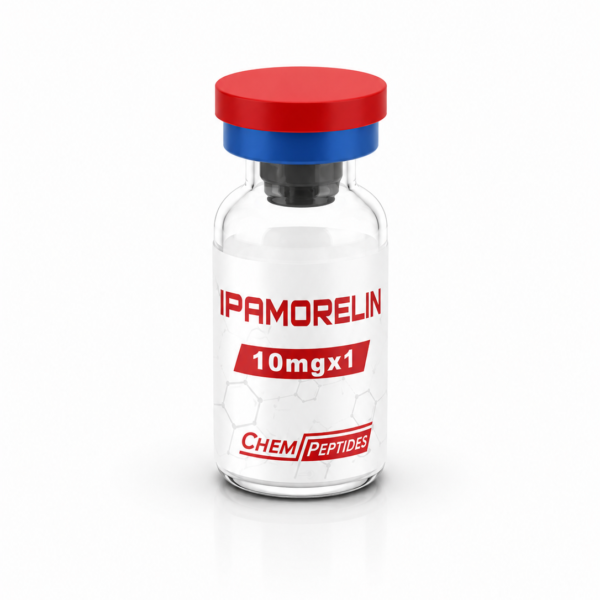
Chempeptides levert verbindingen voor dit soort werk: gekarakteriseerd, gedocumenteerd en nauwkeurig geëtiketteerd. De flacon die arriveert is een instrument voor de werkbank. Wat ermee gebeurt, wordt begrensd door het standaard wetenschappelijke kader: in-vitro, gerepliceerd, peer-reviewbaar.
Uitsluitend voor laboratorium- en analytisch onderzoek. Niet voor menselijke consumptie, dierlijke consumptie of therapeutisch gebruik. Certificates of Analysis per batch beschikbaar op aanvraag.
Gerelateerd onderzoek
Research disclaimer▾
Alle informatie op deze pagina is bedoeld voor laboratoriumonderzoek en in-vitro studies. Geen humane consumptie. Geen medische claims. Producten zijn niet goedgekeurd door EMA of FDA voor therapeutisch gebruik.
Research-grade materiaal bij Chempeptides
De meest gebruikte research peptiden uit onze catalogus:
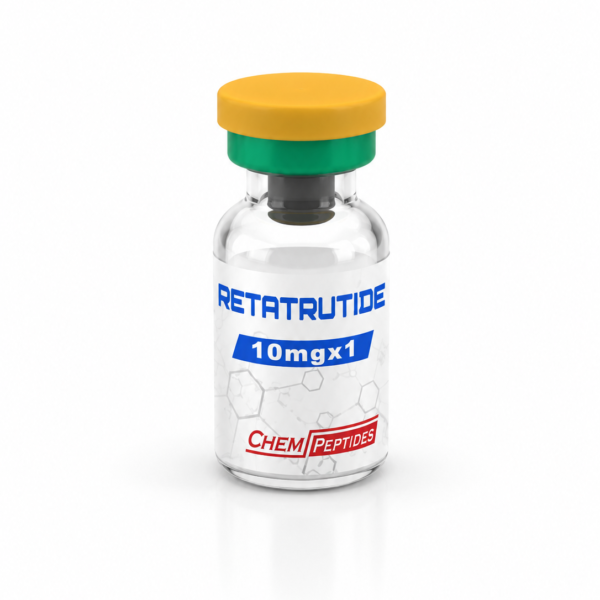
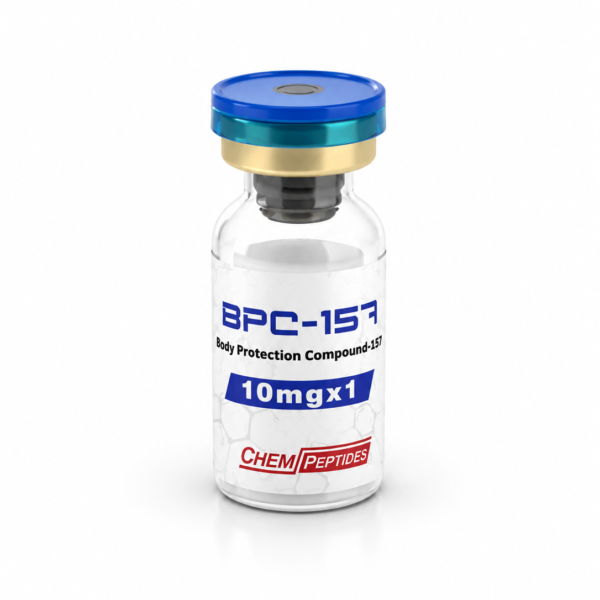
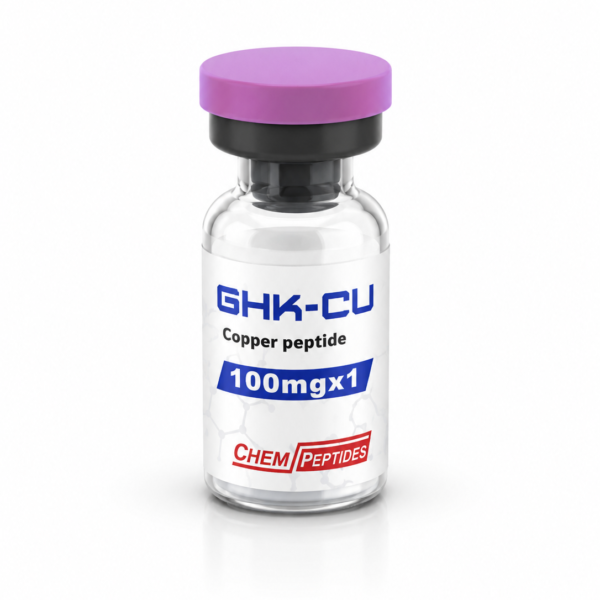
Betalen met iDEAL of Wero. Verzending in discrete verpakking vanuit Nederland. Uitsluitend voor laboratorium- en onderzoeksdoeleinden.