
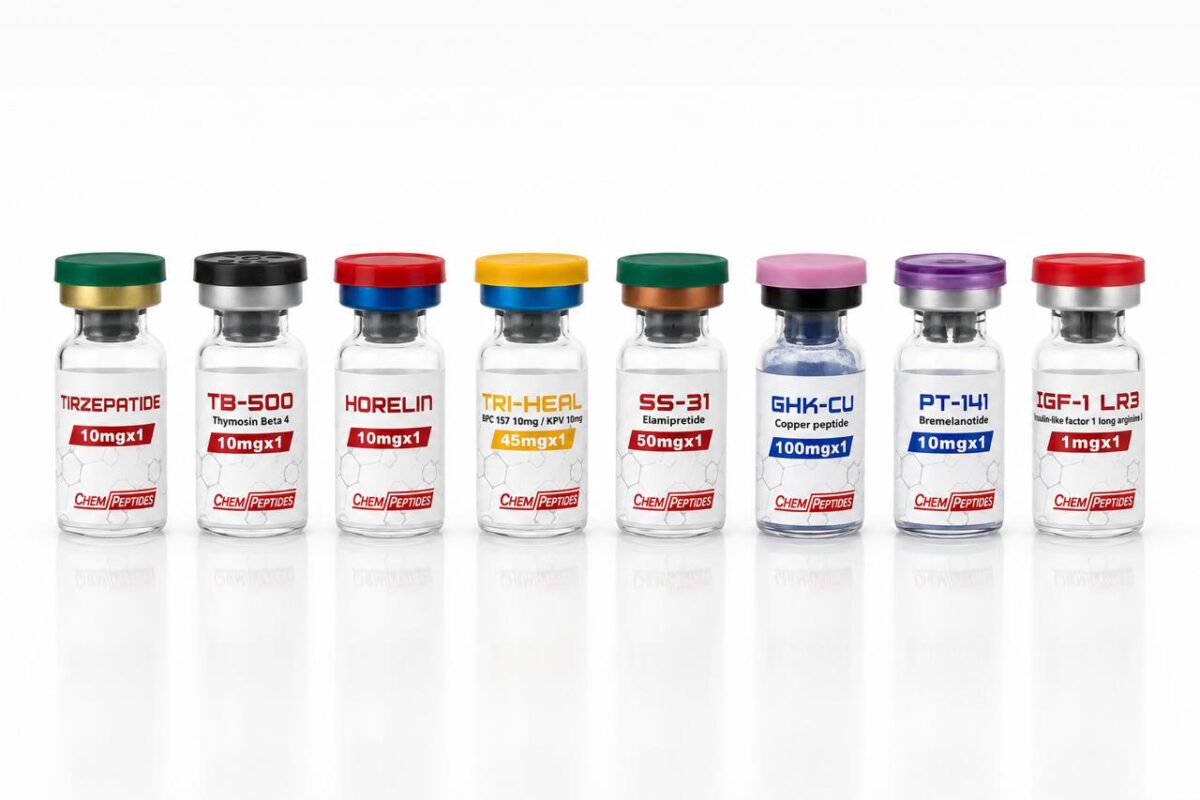
Wat het beste is voor lichaamssamenstelling hangt af van wat je onder beste verstaat: snelheid, omvang, specificiteit voor vetmassa of behoud van vetvrije massa. De gepubliceerde onderzoeksliteratuur geeft voor elk daarvan concrete cijfers. Dit artikel brengt de rangorde van verbindingen in kaart over de eindpunten die in trials daadwerkelijk zijn gemeten.
De rangorde op gepubliceerd trial-eindpunt
| Plaats | Verbinding | Gewichtsreductie | Duur van de trial | Klasse |
|---|---|---|---|---|
| 1 | Retatrutide | 24,2 procent | 48 weken | Drievoudige agonist, GLP-1, GIP en glucagon |
| 2 | Tirzepatide | 22,5 procent | 72 weken | Dubbele agonist, GLP-1 en GIP |
| 3 | Semaglutide | 14,9 procent | 68 weken | Enkelvoudige GLP-1 agonist |
| 4 | Liraglutide | Ongeveer 8 procent | 56 weken | Enkelvoudig GLP-1, dagelijks |
Alle cijfers zijn gepubliceerd in collegiaal getoetst klinisch onderzoek in de New England Journal of Medicine. De gedetailleerde uitwerking per trial staat in onze drievoudige vergelijking.
De verdeling binnen de lichaamssamenstelling
Gewichtsverlies is niet hetzelfde als zuiver vetverlies. DEXA-scangegevens uit de STEP- en SURMOUNT-trials laten ongeveer het volgende zien:
- 65 tot 75 procent van het gewichtsverlies is vetmassa
- 25 tot 35 procent is vetvrije massa
Die verhouding komt overeen met onderzoek naar klassieke calorierestrictie: de GLP-1 klasse spaart vetvrij weefsel niet bij voorkeur. Krachttraining tijdens het protocol verschuift de verhouding richting beter behoud van vetvrije massa.
Het eindpunt specifiek voor vetmassa
Voor zuivere afname van vetmassa, de maat die het meest relevant is voor onderzoek naar lichaamssamenstelling:
- Retatrutide 12mg: ongeveer 18 tot 19 procent afname van vetmassa
- Tirzepatide 15mg: ongeveer 16 tot 18 procent afname van vetmassa
- Semaglutide 2,4mg: ongeveer 10 tot 11 procent afname van vetmassa
De glucagonarm van de drievoudige agonist levert extra energieverbruik bovenop de verlaagde inname. Dat verschuift de verhouding tussen verlies van vetmassa en vetvrije massa in gunstige richting.
Snelheid van het effect, de mijlpalen rond week 12
Voor onderzoeksprotocollen die de vroege respons meten, rond week 12 van de toediening:
- Retatrutide 12mg: ongeveer 10 procent gewichtsverlies in week 24, geextrapoleerd uit het verloop over 48 weken
- Tirzepatide 15mg: ongeveer 7 procent in week 12
- Semaglutide 2,4mg: ongeveer 5 procent in week 16
Bekijk ons artikel over het wekelijkse verloop in fase 3 voor de volledige tijdlijn per week.
Peptiden voor weefselherstel vormen een andere categorie
BPC-157 en TB-500 komen niet voor in onderzoek naar lichaamssamenstelling, omdat hun mechanisme zich richt op weefselherstel en niet op energieregulatie. Het zijn referentieverbindingen voor onderzoek naar letsel en herstel, niet voor gewichtsverlies.
Combinaties van GHRH en GHRP in historisch perspectief
Voor het GLP-1 tijdperk vormden GHRH-analogen zoals CJC-1295 en sermorelin samen met GHRP’s zoals ipamorelin en GHRP-2 de belangrijkste peptidestack voor onderzoek naar lichaamssamenstelling. De eindpunten waren bescheiden, ongeveer 3 tot 5 procent reductie over 12 tot 16 weken, en de literatuur mat vooral verhoging van IGF-1 en afname van visceraal vet in plaats van het volledige lichaamsgewicht. De GLP-1 klasse heeft deze stack vervangen als referentieverbinding voor dit type onderzoek.
MOTS-c en mitochondriale peptiden
MOTS-c laat metabole verbeteringen zien in onderzoeksmodellen, maar de omvang van het effect op lichaamssamenstelling is klein vergeleken met de GLP-1 klasse. De belangstelling is mechanistisch, gericht op signalering tussen mitochondrion en celkern, en niet op gewichtsverlies als hoofddoel.
5-Amino-1MQ als aangrenzende invalshoek
Onderzoek naar NNMT-remming laat energetische effecten zien die specifiek zijn voor vetweefsel, zonder gewichtsverlies als primair eindpunt. Bruikbaar als aanvullende onderzoekslijn naast GLP-1 protocollen, niet als zelfstandige vetverliesverbinding.
Kiezen op basis van de onderzoeksvraag
- Maximale omvang van verandering in lichaamssamenstelling: retatrutide, het nieuwst en met het hoogste eindpunt
- Best gevalideerde langetermijndata: semaglutide, met de langste gepubliceerde staat van dienst
- Best verdragen binnen een onderzoeksproces: tirzepatide, met in sommige studies minder misselijkheid
- Mechanistisch onderzoek naar GIP: tirzepatide
- Onderzoek naar de route van energieverbruik: retatrutide, vanwege de glucagonarm
Chempeptides levert alle drie met een batch-specifiek certificaat. Bekijk de onderzoekscatalogus.
Uitsluitend voor laboratoriumonderzoek. Trialdata samengevat uit collegiaal getoetst onderzoek.
Gerelateerd onderzoek
- GLP-1 peptiden in sportonderzoek: eindpunten voor lichaamssamenstelling en prestatie
- Tirzepatide tegenover semaglutide voor lichaamssamenstelling: vetverlies vergeleken
- Hoe GLP-1 peptiden werken: een uitleg in gewone taal voor onderzoekers
- Chempeptides versus Pure Lab Peptides: catalogus en kwaliteit vergeleken
- Hoe Snel Val Je Af Met Peptides? Wat Echte Doktoren Onderzochten in Klinische Trials
Research disclaimer▾
Alle informatie op deze pagina is bedoeld voor laboratoriumonderzoek en in-vitro studies. Geen humane consumptie. Geen medische claims. Producten zijn niet goedgekeurd door EMA of FDA voor therapeutisch gebruik.
Research-grade materiaal bij Chempeptides
De meest gebruikte research peptiden uit onze catalogus:
Betalen met iDEAL of Wero. Verzending in discrete verpakking vanuit Nederland. Uitsluitend voor laboratorium- en onderzoeksdoeleinden.