

Gedurende het grootste deel van de geschiedenis van de moleculaire biologie werd het mitochondrion behandeld als een energiecentrale met beperkte communicatieve ambitie. Het maakte ATP, reguleerde het metabolisme, gaf af en toe aanleiding tot apoptose en bleef verder netjes binnen zijn eigen rol. Toen werd een klein open leesraam, ingebed in het 12S ribosomale RNA-gen van het mitochondriale DNA, gekarakteriseerd in 2015, en het vakgebied kreeg er een nieuwe categorie signaalmolecuul bij: van mitochondriën afgeleide peptiden. MOTS-c is het best bestudeerde lid van die opkomende klasse, en het herdefinieert de manier waarop onderzoekers denken over het metabole gesprek tussen mitochondriën en de rest van de cel.
Wat MOTS-c is
MOTS-c is een peptide van 16 aminozuren dat wordt gecodeerd binnen het mitochondriale genoom in plaats van het nucleaire genoom. Deze oorsprong is wat het categorisch anders maakt dan vrijwel elk ander onderzoekspeptide. De meeste peptiden waarmee we werken zijn fragmenten van eiwitten die door nucleair DNA worden gecodeerd, op cytoplasmatische ribosomen worden vertaald en via standaard secretoire routes worden verwerkt. MOTS-c wordt gecodeerd in het mitochondrion zelf, vertaald op mitochondriale ribosomen en vervolgens geëxporteerd naar het cytoplasma en uiteindelijk naar de bloedbaan.
De moleculaire implicatie is aanzienlijk: MOTS-c is een van de weinige signaalmoleculen waarvan de expressie de mitochondriale transcriptionele toestand rechtstreeks weerspiegelt. Wanneer mitochondriën onder stress staan, overvloedig aanwezig zijn of biogenese ondergaan, reageren de MOTS-c-niveaus daarop. Het peptide is een directe uitlezing van mitochondriale activiteit die voor de rest van de cel beschikbaar is.
De AMPK-as
Het meest consistent gerapporteerde mechanisme in gepubliceerd MOTS-c-onderzoek is de activatie van AMP-geactiveerd proteïnekinase (AMPK), de centrale metabole sensor in eukaryote cellen. AMPK is het enzym dat het cellulaire metabolisme van anabole modus naar katabole modus schakelt wanneer energie schaars is. Het zet vetzuuroxidatie, mitochondriale biogenese, autofagie en een gecoördineerde verschuiving weg van glucose en naar alternatieve brandstoffen in gang.
Toediening van MOTS-c in dier- en celkweekmodellen heeft herhaaldelijk AMPK-activatie aangetoond in skeletspier, lever en vetweefsel. De stroomafwaartse effecten die in deze modellen worden waargenomen, verbeterde glucoseverwerking, verhoogde vetoxidatie, versterkte mitochondriale ademhaling, zijn de effecten die verwacht worden bij aanhoudende AMPK-signalering. Dit is het mechanistische anker van de MOTS-c-literatuur.
Het kader van de exercise mimetic
Een reden waarom MOTS-c brede onderzoeksaandacht trok, is de overlap tussen zijn moleculaire signatuur en de cellulaire respons op duurtraining. Beide verhogen de AMPK-activatie, beide stimuleren mitochondriale biogenese via PGC-1α-signalering, beide verbeteren de insulinegevoeligheid in skeletspier, en beide verschuiven de brandstofvoorkeur naar vetzuuroxidatie.
Dit is geen gelijkstelling. Lichaamsbeweging produceert tientallen aanvullende signalen, mechanische belasting op spiervezels, calciumflux, lactaatophoping, hormonale verschuivingen, die MOTS-c niet reproduceert. Maar de convergente metabole signatuur is echt, en het is wat MOTS-c interessant maakt als onderzoeksmiddel voor de metabole component van de trainingsrespons.
Veroudering en de link met levensduuronderzoek
Verschillende gepubliceerde studies hebben circulerende MOTS-c-niveaus gemeten over leeftijdscohorten in diermodellen, met consistente observaties dat de niveaus afnemen met de chronologische leeftijd. De afname correleert met verminderingen in mitochondriale functie in skeletspier en met de progressieve insulineresistentie die kenmerkend is voor het verouderende metabolisme.
Of toediening van MOTS-c in verouderde diermodellen leeftijdsgebonden metabole achteruitgang omkeert of slechts compenseert, is een vraag die de literatuur nog aan het beantwoorden is. De fenotypes die in gepubliceerd werk bij MOTS-c-behandelde oude muizen worden waargenomen, omvatten verbeteringen in inspanningsvermogen, herstel van glucoseverwerking en veranderingen in lichaamssamenstelling. Dit zijn observaties in gedefinieerde modelsystemen, geen therapeutische claims.
Hyperglykemie en de rol in de stressrespons
Een bijzonder interessante onderzoekslijn binnen MOTS-c verbindt het peptide met acute metabole stress. De niveaus stijgen sterk als reactie op hyperglykemie, lichaamsbeweging en andere omstandigheden die de mitochondriale functie onder druk zetten. Dit suggereert dat MOTS-c mogelijk functioneert als een noodsignaal, een mitochondriale boodschap aan de rest van de cel die zegt dat de metabole omstandigheden een systemische aanpassing vereisen.
Deze stressgevoelige rol onderscheidt MOTS-c van constitutief tot expressie gebrachte metabole hormonen. Het staat qua karakter dichter bij een stresssignaal zoals cortisol dan bij een homeostatische regulator zoals insuline, hoewel de analogie duidelijke grenzen kent.
De bredere klasse van van mitochondriën afgeleide peptiden
MOTS-c is het best gekarakteriseerde van mitochondriën afgeleide peptide, maar niet het enige. Humanin, dat eveneens binnen het mitochondriale DNA wordt gecodeerd, werd jaren eerder geïdentificeerd en heeft zijn eigen onderzoeksliteratuur die zich richt op cytoprotectie en neuroprotectie in celkweekmodellen. Verschillende kleinere peptiden die in het mitochondriale DNA worden gecodeerd, gezamenlijk SHLPs (small humanin-like peptides) genoemd, zijn recenter gekarakteriseerd met effecten op cellulaire overleving, metabolisme en ontsteking.
Samen suggereren deze moleculen dat het mitochondrion geen stille passagier is maar een actieve deelnemer aan cellulaire signalering, met een eigen genoom dat peptideboodschappers produceert die het systemische metabolisme vormgeven.
Aandachtspunten voor onderzoekshantering
MOTS-c wordt gelyofiliseerd geleverd voor onderzoeksgebruik. Reconstitutie in steriel water of bacteriostatisch water is standaard voor de meeste assay-formaten. Het peptide is relatief hydrofiel en lost schoon op zonder dat organische co-solventen nodig zijn. Standaardopslag bij -20°C van gelyofiliseerd materiaal en van in aliquots verdeelde gereconstitueerde oplossingen volgt de algemene opslagprotocollen voor peptiden.
Voor mechanistische studies is de keuze van cellijn of diermodel van belang: MOTS-c-signalering hangt af van de integriteit van de AMPK-route, dus modellen met een aangetaste AMPK-regulatie zullen niet de verwachte respons produceren.
Waarom dit vakgebied ertoe doet
Van mitochondriën afgeleide peptiden vertegenwoordigen een hele laag van cellulaire communicatie die de klassieke moleculaire biologie decennialang heeft gemist. Elk onderzoekspeptide dat momenteel in de catalogus staat, was ooit een onbekend molecuul met een opkomende literatuur. MOTS-c bevindt zich nu precies in die fase, voldoende gekarakteriseerd om een nuttig onderzoeksmiddel te zijn, en nog steeds onvolledig genoeg in kaart gebracht om actief mechanistisch onderzoek te ondersteunen.
Uitsluitend voor laboratorium- en onderzoeksgebruik. Bekijk mitochondriale & cellulaire energiepeptiden bij Chempeptides.
Gerelateerd om te lezen: GLP-1 Agonists: Tirzepatide vs Semaglutide
Research disclaimer▾
Alle informatie op deze pagina is bedoeld voor laboratoriumonderzoek en in-vitro studies. Geen humane consumptie. Geen medische claims. Producten zijn niet goedgekeurd door EMA of FDA voor therapeutisch gebruik.
Onderzoeksmateriaal bij dit onderwerp
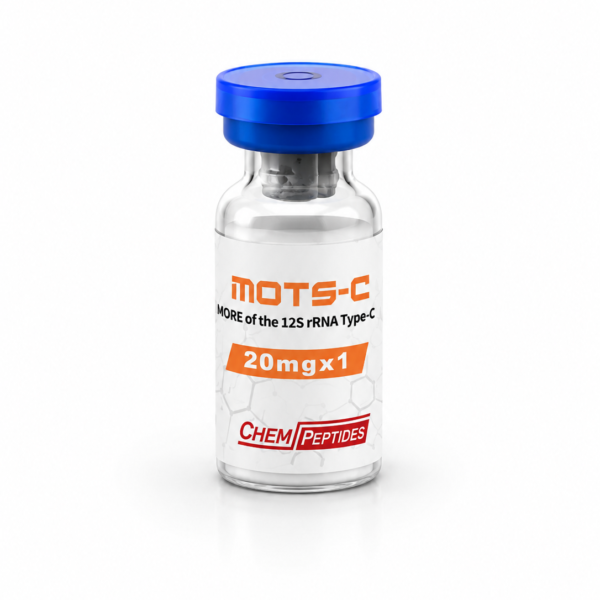
De peptiden die in mitochondriaal en metabool onderzoek het meest worden gebruikt:


Betalen met iDEAL of Wero. Verzending in discrete verpakking vanuit Nederland. Uitsluitend voor laboratorium- en onderzoeksdoeleinden.