
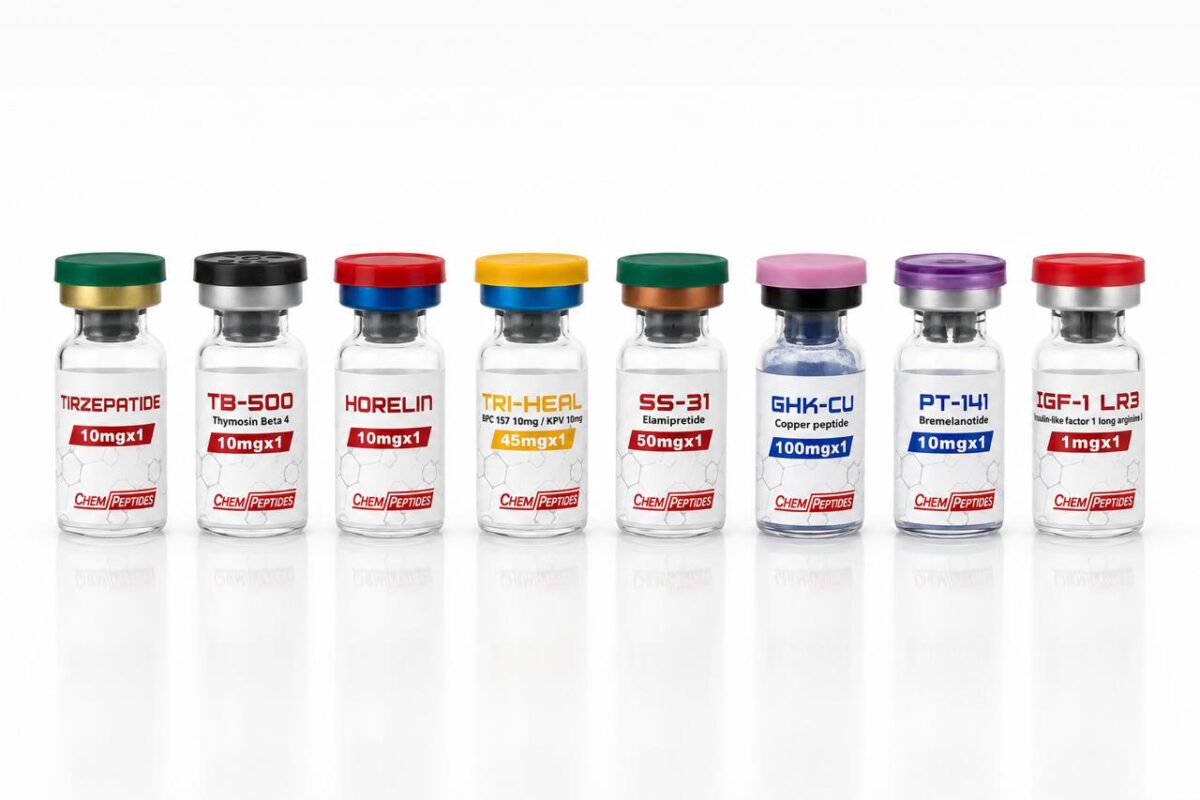
Thymosine beta-4 is een klein actine-bindend eiwit dat in vrijwel elke cel van het menselijk lichaam voorkomt en stilletjes het cytoskelet reguleert. TB-500 is het synthetische peptidefragment dat overeenkomt met het centrale actieve gebied van dat eiwit. In de onderzoeksliteratuur heeft TB-500 een reeks mechanistische en diermodel-studies opgebouwd die het tot een van de interessantere non-incretine peptiden in het huidige onderzoek maken. Dit overzicht verzamelt wat gepubliceerd werk daadwerkelijk zegt over hoe het molecuul zich gedraagt in de context van weefselherstel.
Structuur en oorsprong
TB-500 is een fragment van 17 aminozuren afgeleid van het grotere thymosine beta-4 (Tβ4) eiwit van 43 residuen. Het fragment komt overeen met het actine-bindende domein van Tβ4 en behoudt veel van de cellulaire effecten die bij het volledige oudereiwit worden waargenomen. Synthetisch TB-500 wordt doorgaans geproduceerd via SPPS en gelyofiliseerd geleverd voor onderzoeksgebruik.
Voorgesteld mechanisme: actine-sequestratie
De best gekarakteriseerde moleculaire rol van Tβ4, en bij uitbreiding van het TB-500 fragment, is de binding aan monomeer G-actine en het voorkomen van de polymerisatie ervan tot F-actine filamenten. Dit creëert een gereguleerde voorraad beschikbare actine-monomeren die cellen kunnen mobiliseren wanneer het cytoskelet snel geherstructureerd moet worden: tijdens migratie, wondheling of het uitbreiden van cellulaire uitlopers.
De biochemie is opvallend in haar precisie: één Tβ4 molecuul bindt één G-actine monomeer met een relatief bescheiden affiniteit (Kd in het lage micromolaire bereik), maar de hoge cellulaire concentraties van Tβ4 zorgen ervoor dat het bufferende effect op de actine-voorraad aanzienlijk is.
Celmigratie en chemotaxis
Dier- en celkweekstudies hebben herhaaldelijk waargenomen dat Tβ4 en TB-500 de celmigratie beïnvloeden. In keratinocyt- en endotheelcelmodellen verhoogt blootstelling aan het peptide de snelheid waarmee cellen zich in vitro naar wondgebieden verplaatsen. Het voorgestelde verband is de actine-voorraad: cellen die hun cytoskelet snel kunnen op- en afbouwen, migreren sneller. Of dit effect puur mechanisch is (meer beschikbare actine-monomeren) of dat Tβ4 ook via specifieke receptoren signaleert, blijft een actieve onderzoeksvraag.
Waarnemingen over angiogenese
Verschillende preklinische modellen hebben verhoogde angiogene responsen waargenomen in weefsels die aan Tβ4 of TB-500 werden blootgesteld. Het mechanisme lijkt effecten op endotheelcelmigratie en de vorming van capillaire buizen in vitro te omvatten, met enig bewijs voor opregulatie van de expressie van vasculaire endotheliale groeifactor in bepaalde weefsels. Belangrijk is dat dit waarnemingen zijn in gedefinieerde modelsystemen; extrapolatie naar vasculaire uitkomsten op het niveau van het hele organisme vereist nader werk en valt buiten het bestek van mechanistisch onderzoek.
Modulatie van ontsteking in diermodellen
Een consistente lijn door de gepubliceerde literatuur is dat toediening van Tβ4 in dier-letselmodellen gepaard gaat met verminderde ontstekingsmarkers. De voorgestelde route omvat de neerwaartse regulatie van nuclear factor kappa B (NF-κB) signalering en modulatie van cytokineprofielen in beschadigd weefsel. Dit zijn waarnemingen op populatieniveau in gedefinieerde diermodellen, nuttig voor het genereren van hypothesen over het mechanisme, niet voor klinische extrapolatie.
De actine-onafhankelijke vraag
Een van de interessantere open onderzoeksvragen is of Tβ4 cellulaire effecten heeft die niet worden verklaard door zijn actine-bindende activiteit. Diverse artikelen hebben receptor-gemedieerde effecten voorgesteld die specifieke celoppervlaktargets betreffen, maar de moleculaire details blijven deels betwist. Het beantwoorden van deze vraag is een van de actieve fronten in het Tβ4 onderzoek.
Waarom het fragment in plaats van het volledige eiwit
TB-500 als fragment van 17 residuen biedt praktische voordelen ten opzichte van volledig Tβ4 voor onderzoek: het is eenvoudiger op schaal te synthetiseren via SPPS, gemakkelijker te zuiveren tot research-grade specificaties, chemisch stabieler en het behoudt de centrale actine-bindende activiteit. De afweging is dat functies van Tβ4 die afhankelijk zijn van gebieden buiten het fragment niet gereproduceerd worden. Dit is een van de variabelen die onderzoekers moeten beheersen bij het vergelijken van TB-500 met resultaten voor volledig Tβ4 in de literatuur.
Aandachtspunten voor onderzoekshantering
TB-500 wordt gelyofiliseerd geleverd en wordt doorgaans gereconstitueerd in steriel water of bacteriostatisch water bij concentraties die geschikt zijn voor de assay. Het peptide is redelijk hydrofiel en lost helder op. Opslag van gereconstitueerd materiaal dient de standaard aliquoteringspraktijk te volgen om herhaalde vries-dooicycli te vermijden. Gelyofiliseerde flacons die bij -20°C worden bewaard, behouden hun stabiliteit gedurende langere perioden.
Waar het onderzoeksveld naartoe gaat
De meest actieve gebieden in het huidige TB-500 en Tβ4 onderzoek zijn de moleculaire details van eventuele receptor-gemedieerde signalering, de karakterisering van de relatie tussen de actine-bindende activiteit en de waargenomen cellulaire effecten, en de mechanistische basis voor de ontstekingsmodulerende waarnemingen die in meerdere letselmodellen worden gezien. Dit zijn mechanistische vragen, geen therapeutische claims.
Uitsluitend voor laboratorium- en onderzoeksgebruik. Bekijk de regeneratie-peptidecategorie van Chempeptides voor research-grade verbindingen met HPLC-verificatie.
Gerelateerd: BPC-157: recente bevindingen in weefselherstel
Gerelateerd onderzoek
- BPC-157 onderzoeksoverzicht: mechanismen en literatuur over weefselherstel
- BPC-157 vs TB-500: vergelijking van weefselherstelmechanismen
- TB-500 thymosin beta-4 voor spier en pees recovery: research grade gids
- BPC-157 en TB-500 stacking: wat in-vitro en dieronderzoek daadwerkelijk laat zien
- GHK-Cu en BPC-157 in onderzoek naar huid- en weefselherstel: een mechanistisch overzicht
Research disclaimer▾
Alle informatie op deze pagina is bedoeld voor laboratoriumonderzoek en in-vitro studies. Geen humane consumptie. Geen medische claims. Producten zijn niet goedgekeurd door EMA of FDA voor therapeutisch gebruik.
Onderzoeksmateriaal bij dit onderwerp
De peptiden die in weefselherstel-onderzoek het meest worden gebruikt:
 BPC 157 10mg€ 70,00
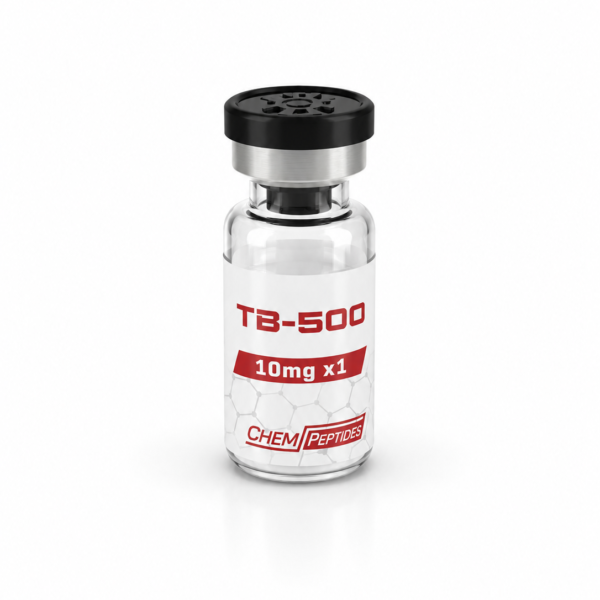 TB500 10mg€ 70,00
 BPC-157 + TB-500 10/10mg€ 100,00
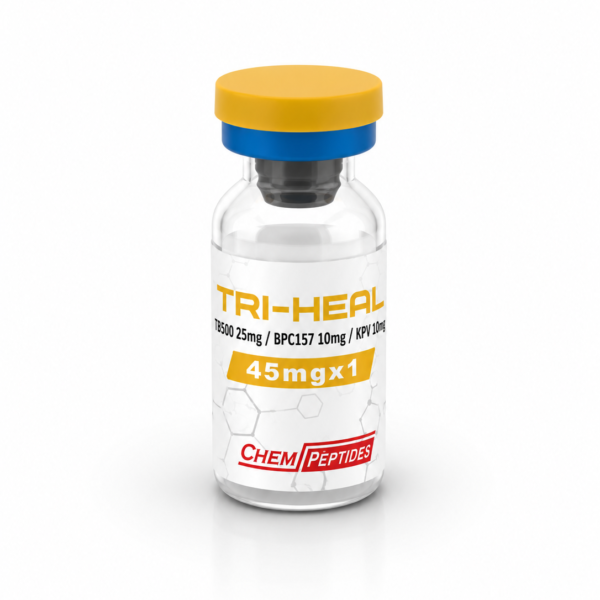 Tri-Heal TB-500 + BPC-157 + KPV 25/10/10mg€ 140,00
Betalen met iDEAL of Wero. Verzending in discrete verpakking vanuit Nederland. Uitsluitend voor laboratorium- en onderzoeksdoeleinden.