Twee korte peptiden die in de jaren 80 en 90 werden ontwikkeld in Russische neurofarmacologische onderzoekslabs, hebben de afgelopen twee decennia een hoeveelheid literatuur opgebouwd die hen stevig in de categorie cognitieve peptiden plaatst. Selank en Semax zijn structureel eenvoudig, mechanistisch onderscheidend van de meeste in het Westen ontwikkelde onderzoekspeptiden, en grotendeels onbekend bij onderzoekers buiten de regio’s waar ze voor het eerst werden gekarakteriseerd. Hier volgt een overzicht van wat gepubliceerd werk daadwerkelijk over hen rapporteert.
Oorsprong en structuur
Beide peptiden kwamen voort uit werk aan het V.V. Zakusov Instituut voor Farmacologie in Moskou. Semax is een heptapeptide afgeleid van een fragment van adrenocorticotroop hormoon (ACTH): specifiek het 4-10 gebied, aan de C-terminus gemodificeerd om de biologische halfwaardetijd te verlengen en de endocriene activiteit van het ACTH-oudermolecuul te verwijderen. Het resultaat is een peptide met effecten op het centrale zenuwstelsel maar zonder de activering van de hypothalamus-hypofyse-bijnier-as die ACTH zelf kenmerkt.
Selank is een heptapeptide afgeleid van tuftsine, een immunomodulerend fragment van immunoglobuline G. Net als Semax werd de natuurlijke sequentie aan de C-terminus gemodificeerd om de stabiliteit te verlengen. Beide peptiden delen een vergelijkbare ontwerpfilosofie: neem een kort bioactief fragment met bekende centrale effecten, stabiliseer het voor in-vivo werk, en karakteriseer het gedrag ervan als een geïsoleerde onderzoeksverbinding.
Het BDNF-verband
Een van de best gerepliceerde bevindingen in Semax-onderzoek is de opregulatie van de expressie van brain-derived neurotrophic factor (BDNF) in specifieke hersengebieden na toediening van het peptide in knaagdiermodellen. BDNF is een centrale speler in synaptische plasticiteit, neuronale overleving en leergerelateerde herstructurering van neurale circuits. Het effect van Semax op BDNF lijkt snel, regionaal specifiek (met name in hippocampaal en corticaal weefsel in gepubliceerde studies) en reproduceerbaar over meerdere laboratoria.
Het mechanisme waarmee Semax dit effect teweegbrengt is niet volledig opgehelderd. Voorgestelde routes omvatten modulatie van melanocortinereceptorsignalering, directe effecten op de transcriptie van neurotrofinegenen, en indirecte effecten via neurotransmittersystemen. De stroomafwaartse gevolgen die in diermodellen worden waargenomen (effecten op geheugenprestaties in standaard leerparadigma’s, aandachtsmaten, en herstelmarkers in letselmodellen) lijken afhankelijk te zijn van deze BDNF-respons.
Selank en de anxiolytische literatuur
Het meest bestudeerde gedragseffect van Selank in diermodellen is anxiolytisch-achtige activiteit in standaardtests (elevated plus maze, open veld, light-dark box). In tegenstelling tot benzodiazepinen lijkt Selank in gepubliceerde mechanistische studies niet primair te werken via potentiëring van de GABA-A receptor. De voorgestelde route omvat modulatie van serotonerge en mogelijk enkefalinerge systemen, naast effecten op cytokineprofielen die teruggrijpen op de tuftsine-oorsprong van het peptide.
Dit mechanistische onderscheid is wat Selank interessant maakt als onderzoekstool: het produceert anxiolytisch-achtige gedragsuitkomsten zonder de sedatie, motorische beperking of tolerantieontwikkeling die doorgaans met GABAerge verbindingen in dezelfde dierassays gepaard gaan.
Intranasale toediening als onderzoeksroute
Beide peptiden zijn uitgebreid bestudeerd via intranasale toediening in diermodellen. De route omzeilt het first-pass metabolisme en biedt een directer pad naar de compartimenten van het centrale zenuwstelsel via olfactorische en trigeminale routes. Intranasale farmacokinetische studies bij knaagdieren hebben binnen enkele minuten na toediening de intrede van het peptide in het cerebrospinaal vocht gemeten, wat het gebruik van deze route in mechanistisch onderzoek ondersteunt.
Voor onderzoeksopzet introduceert intranasale toediening zijn eigen variabelen: oplossingsvolume, concentratie, het specifieke toedieningsapparaat en de positionering van het dier beïnvloeden allemaal de biobeschikbaarheid en moeten over experimentele groepen worden gestandaardiseerd.
Halfwaardetijd en structurele stabiliteit
Zowel natief ACTH(4-10) als natief tuftsine heeft een zeer korte biologische halfwaardetijd: in de orde van minuten in plasma. De C-terminale modificaties die in Semax (Pro-Gly-Pro) en Selank (Pro-Gly-Pro) zijn aangebracht, verlengen de functionele halfwaardetijd aanzienlijk door bestand te zijn tegen carboxypeptidase-splitsing. Dit is een doelbewust stuk medicinale chemie, geen toeval: de oorspronkelijke fragmenten zouden zonder deze stabilisatie geen bruikbare onderzoeksverbindingen zijn.
Open mechanistische vragen
Ondanks de opgebouwde literatuur blijven diverse mechanistische vragen actief in het onderzoeksveld:
- Of de centrale effecten van Semax primair afhankelijk zijn van melanocortinereceptorsignalering of van andere receptorsystemen.
- Het moleculaire doelwit dat verantwoordelijk is voor het anxiolytisch-achtige profiel van Selank in diermodellen.
- De relatie tussen effecten op immuunmodulatie (duidelijker voor Selank, vanwege de tuftsine-oorsprong) en de waarnemingen aan het centrale zenuwstelsel.
- De vertaling van BDNF-effecten bij knaagdieren naar andere soorten in goed gecontroleerde studies.
Deze open vragen zijn wat de verbindingen tot actieve onderzoeksonderwerpen maakt in plaats van afgesloten hoofdstukken.
Aandachtspunten voor onderzoekshantering
Beide peptiden worden doorgaans gelyofiliseerd geleverd en lossen gemakkelijk op in steriel water of bacteriostatisch water. Standaard aliquotering en opslag bij -20°C zijn van toepassing. HPLC-zuiverheidsverificatie is essentieel omdat de gemodificeerde terminale residuen gevoelig zijn voor onvolledige koppeling tijdens de synthese, wat sequentiegerelateerde onzuiverheden kan produceren die de mechanistische interpretatie bemoeilijken.
Uitsluitend voor laboratorium- en onderzoeksgebruik. Bekijk de catalogus met onderzoekspeptiden voor HPLC-geverifieerde verbindingen.
Gerelateerd: Peptiden uitgelegd: de ultieme gids
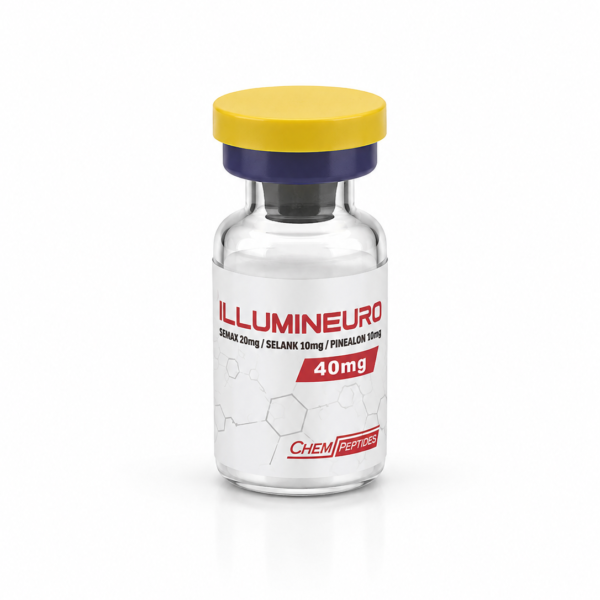
Voor eigen onderzoek: Selank 10mg is los verkrijgbaar, en de Illumineuro Stack combineert Selank, Semax en Pinealon in een vial. Prijzen en specificaties op Selank en Semax kopen.
Gerelateerd onderzoek
- EU-douane en onderzoekspeptiden: gids voor importeurs
- 7 reconstitutiefouten die onderzoekspeptiden afbreken
- Gelyofiliseerde vs vloeibare peptiden: een reconstitutiegids voor onderzoekers
- Onderzoekspeptiden inkopen: een raamwerk voor kwaliteit en compliance
- Peptiden uitgelegd: uw ultieme gids voor het begrijpen van peptiden
Research disclaimer▾
Alle informatie op deze pagina is bedoeld voor laboratoriumonderzoek en in-vitro studies. Geen humane consumptie. Geen medische claims. Producten zijn niet goedgekeurd door EMA of FDA voor therapeutisch gebruik.
Onderzoeksmateriaal bij dit onderwerp
De peptiden die in neurologisch en cognitief onderzoek het meest worden gebruikt:
Betalen met iDEAL of Wero. Verzending in discrete verpakking vanuit Nederland. Uitsluitend voor laboratorium- en onderzoeksdoeleinden.