
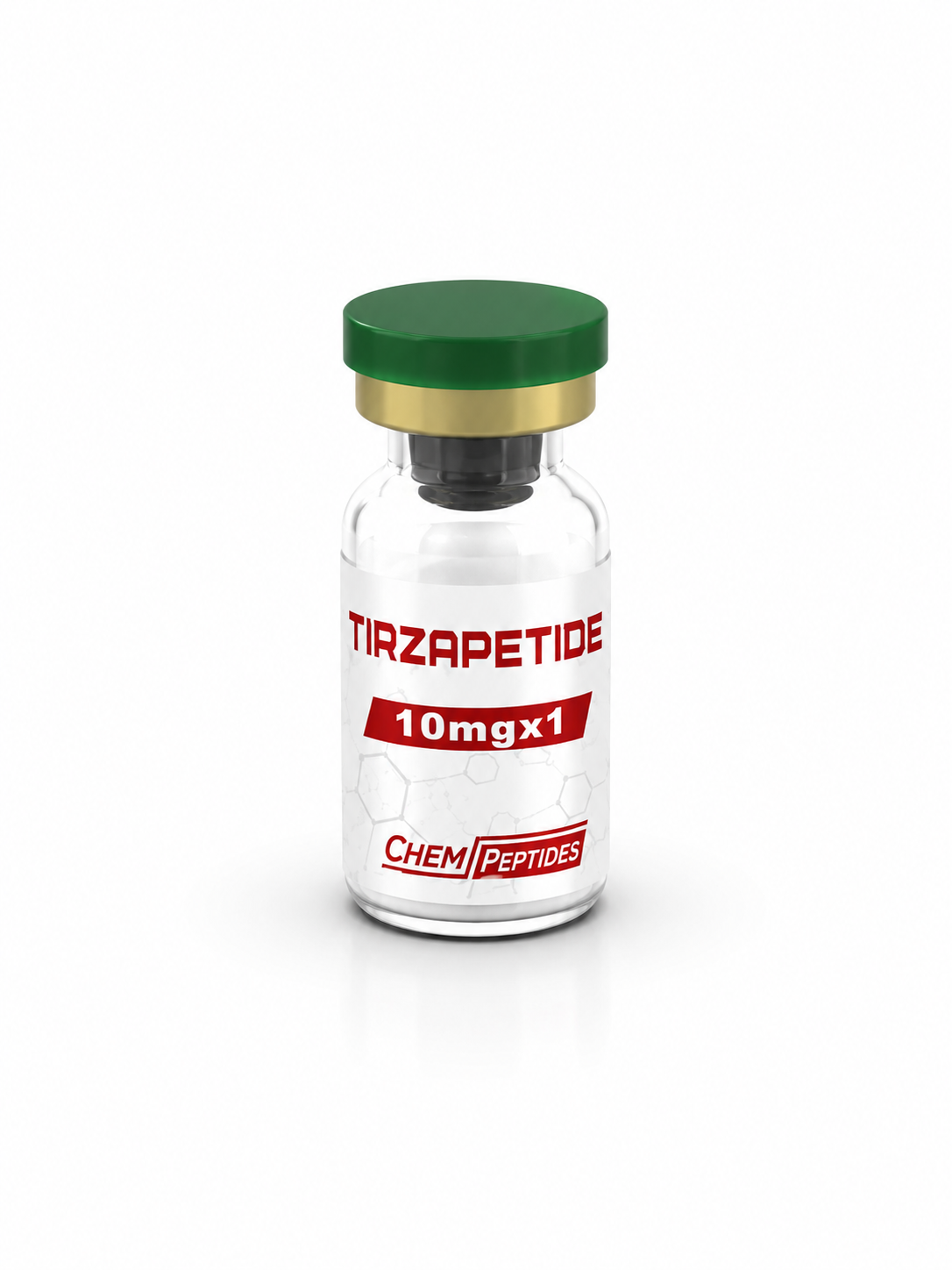
Both semaglutide and tirzepatide deliver double-digit body weight reductions in trials — but they are not interchangeable. The decision between them is not about which “works better.” It’s about which mechanism, half-life and titration curve matches your goal, your timeline and your tolerance threshold.
This guide is for users who already understand what GLP-1 agonists are. We skip the basics and go straight into cycle planning — half-life math, titration schedules, plateau management, side-effect profiles, and how to choose between the two compounds based on what you’re actually trying to achieve.
The mechanism difference that matters
Semaglutide is a single-agonist — it mimics GLP-1 (glucagon-like peptide-1). Tirzepatide is a dual-agonist — it acts on both GLP-1 and GIP (glucose-dependent insulinotropic polypeptide) receptors. That second receptor is the entire reason tirzepatide outperforms semaglutide head-to-head in trials.
GIP activation enhances glucose-dependent insulin secretion, improves lipid metabolism and has additive effects on appetite suppression. The SURPASS-2 trial put tirzepatide head-to-head with semaglutide 1.0 mg in type 2 diabetic patients — tirzepatide at all three doses (5 mg, 10 mg, 15 mg) outperformed semaglutide on weight loss and A1C reduction.
Translation: if your only metric is total body weight reduction at 72 weeks, tirzepatide wins. But weight loss is rarely the only metric.
Half-life math: weekly dosing is not the same as weekly stability
Both compounds are dosed once weekly. Both have half-lives that justify weekly dosing. But the curves are not identical.
- Semaglutide: ~7-day half-life. Steady-state plasma concentration is reached after 4–5 weeks of consistent dosing.
- Tirzepatide: ~5-day half-life. Steady-state is reached in roughly the same window, but the peak-to-trough variation is slightly more pronounced.
What this means in practice: if you miss a dose by 2–3 days on semaglutide, your plasma level barely flinches. On tirzepatide, the same delay produces a sharper dip. Neither is dangerous — but tirzepatide is less forgiving for users with chaotic schedules.
Titration schedules — the part everyone gets wrong
The single biggest mistake new GLP-1 users make is escalating dose too fast. Both compounds require gradual titration to allow GI tolerance to build. Skip steps and you’ll hit nausea, vomiting and dehydration — and most users quit before the compound has had a chance to work.
Semaglutide standard titration
| Week | Dose | Purpose |
|---|---|---|
| 1–4 | 0.25 mg/week | Tolerance phase — minimal weight loss expected |
| 5–8 | 0.5 mg/week | Initial therapeutic dose |
| 9–12 | 1.0 mg/week | Standard maintenance dose |
| 13–16 | 1.7 mg/week | Optional step-up if plateau hit |
| 17+ | 2.4 mg/week | Maximum dose for weight management protocols |
Tirzepatide standard titration
| Week | Dose | Purpose |
|---|---|---|
| 1–4 | 2.5 mg/week | Tolerance phase |
| 5–8 | 5.0 mg/week | Initial therapeutic dose |
| 9–12 | 7.5 mg/week | Step-up |
| 13–16 | 10.0 mg/week | Standard maintenance |
| 17–20 | 12.5 mg/week | Step-up if plateau |
| 21+ | 15.0 mg/week | Maximum dose |
Critical rule: do not step up if you are still experiencing meaningful GI side effects from the previous step. Hold the dose for 2 extra weeks. Time is your friend — the receptors are not going anywhere.
Picking the compound based on your actual goal
Goal: Fast, aggressive fat loss (12–16 weeks)
Choice: Tirzepatide. The dual-agonist mechanism produces faster and deeper appetite suppression. SURMOUNT-1 trial showed 22.5% mean body weight reduction at 72 weeks on the 15 mg dose. For users with significant body fat to lose and a hard timeline, tirzepatide is the more efficient tool.
Goal: Sustainable recomp / gradual loss (6–12 months)
Choice: Semaglutide. Slower onset, smoother curve, easier to titrate. The slower weight-loss trajectory makes muscle preservation more achievable when paired with resistance training and adequate protein.
Goal: Metabolic health improvement (A1C, lipids, insulin sensitivity)
Choice: Tirzepatide. GIP activation produces superior glycemic control and lipid improvements vs. GLP-1 monotherapy. If your driver is metabolic markers rather than scale weight, tirzepatide’s mechanism gives more leverage.
Goal: Long-term maintenance after weight loss
Choice: Either, at lower doses. Maintenance typically requires 25–50% of the dose used during the weight-loss phase. Both compounds support indefinite use at low dose — the question is cost and tolerance.
Plateau management — when the scale stops moving
Every GLP-1 user hits a plateau. It’s not a failure of the compound — it’s biology. Your body adapts to lower energy intake by reducing non-exercise activity thermogenesis (NEAT), slowing metabolism and increasing hunger signals from non-GLP-1 pathways.
Three plateau strategies that work:
- Dose step-up. If you’ve been on a stable dose for 8+ weeks and weight loss has stalled for 3+ weeks, step up. Don’t step up after one stagnant week — that’s noise, not plateau.
- Refeed protocol. Two weeks at maintenance calories to re-sensitize leptin and reset hunger signaling. Counterintuitive, but it works.
- Switch compound. If you’ve maxed semaglutide and are plateaued, switching to tirzepatide often produces a fresh weight-loss window because GIP activation is a new mechanistic input.
Switching from semaglutide to tirzepatide
This is the most common protocol transition in 2026. Two rules:
- Do not step down semaglutide before switching. Stop your last semaglutide dose at the regular interval, then start tirzepatide at the entry dose (2.5 mg) one week later.
- Do not start tirzepatide at your previous semaglutide-equivalent dose. Even if you were on semaglutide 2.4 mg, tirzepatide tolerance must be built from 2.5 mg. The mechanisms are different — your receptor adaptation does not transfer.
Side-effect profile head-to-head
| Side effect | Semaglutide | Tirzepatide |
|---|---|---|
| Nausea (any grade) | ~44% | ~33% |
| Vomiting | ~24% | ~13% |
| Diarrhea | ~30% | ~24% |
| Constipation | ~24% | ~17% |
| Hypoglycemia (non-diabetic) | Rare | Rare |
Counterintuitively, tirzepatide has a slightly better GI tolerance profile despite being the stronger compound. This is partially because GIP activation moderates gastric motility differently than pure GLP-1 stimulation.
Final verdict — which compound to pick
If you’re starting fresh and you want maximum results with manageable side effects, tirzepatide is the stronger choice. The trial data is clear, the GI profile is better, and the mechanism is more complete.
Semaglutide remains the better pick when cost is the deciding factor, when you want the slowest and most controlled weight-loss trajectory, or when you’ve already responded well to GLP-1 monotherapy and want to extend that response without adding complexity.
What never changes: cycle planning beats dose chasing. Build tolerance slowly, hold doses when GI side effects flare, and pick the compound that matches your goal — not the one with the louder marketing.
Gerelateerd onderzoek
- Mounjaro vs Ozempic — Tirzepatide vs Semaglutide Side-by-Side
- GLP-1 Agonists: Tirzepatide vs Semaglutide
- Tirzepatide vs Semaglutide for Body Composition — Fat Loss Compared
- Tirzepatide vs Semaglutide vs Retatrutide — Triple Agonist Research Overview
- Mounjaro vs Ozempic vs Wegovy: De Complete Vergelijking voor 2026
Research disclaimer▾
Alle informatie op deze pagina is bedoeld voor laboratoriumonderzoek en in-vitro studies. Geen humane consumptie. Geen medische claims. Producten zijn niet goedgekeurd door EMA of FDA voor therapeutisch gebruik.
Onderzoeksmateriaal bij dit onderwerp
De peptiden die in metabool en vetverlies-onderzoek het meest worden gebruikt:
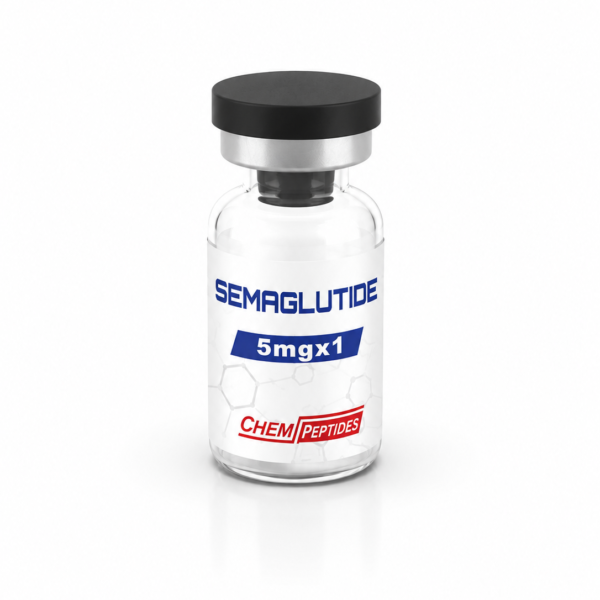
Betalen met iDEAL of Wero. Verzending in discrete verpakking vanuit Nederland. Uitsluitend voor laboratorium- en onderzoeksdoeleinden.