
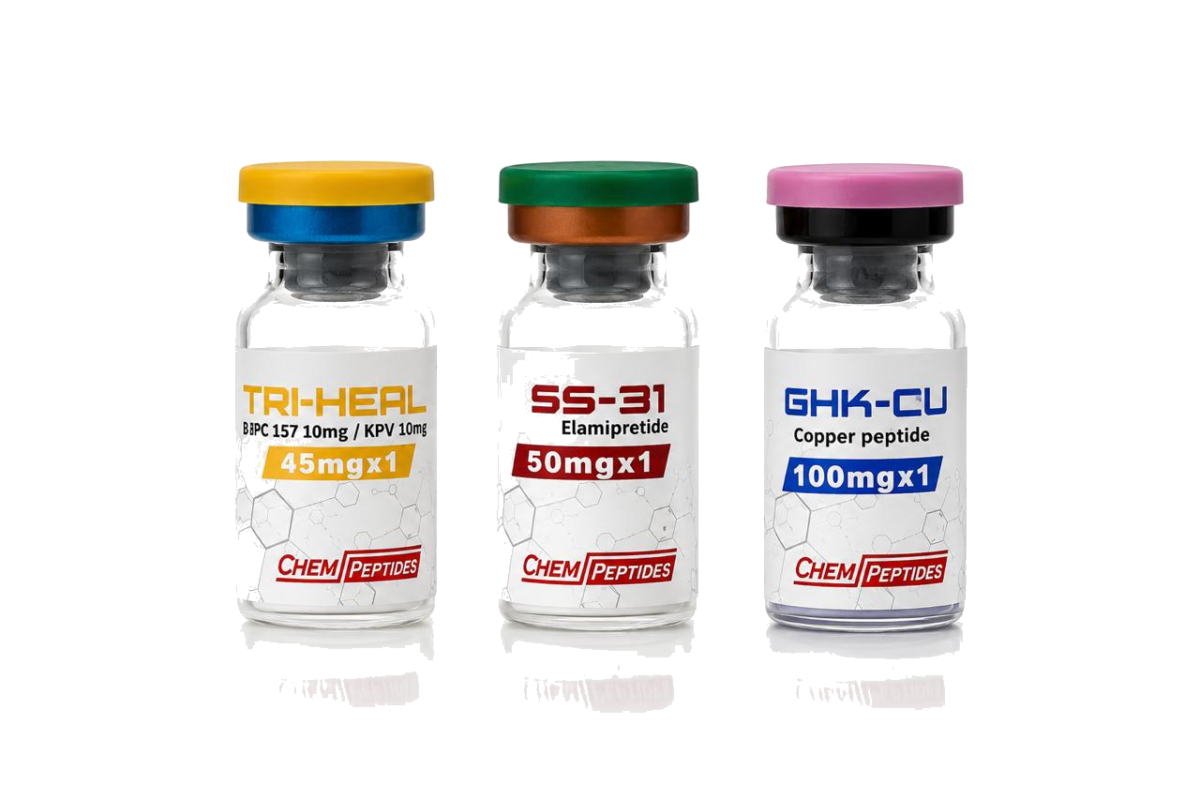
Epitalon (ook geschreven als Epithalon, Epitalone) is een synthetisch tetrapeptide dat voor het eerst werd beschreven aan het St. Petersburg Institute of Bioregulation and Gerontology. De sequentie, Ala-Glu-Asp-Gly, is kort, maar het onderzoekscorpus eromheen omvat telomeraseactivatie, pineale functie en levensduurmodellen. Dit artikel brengt in kaart wat de literatuur daadwerkelijk laat zien.
Herkomst en sequentie
Epitalon is een synthetisch analoog van epithalamin, een polypeptide-extract uit de pijnappelklier van runderen. De sequentie van vier aminozuren (Ala-Glu-Asp-Gly) is het minimale actieve fragment dat via het bijbehorende onderzoeksprogramma is geïdentificeerd. De synthese is eenvoudige vastefase-peptidesynthese (SPPS).
Claims over telomeraseactivatie
De meest geciteerde onderzoeksbevinding is dat Epitalon de telomeraseactiviteit in humane somatische cellen in vitro verhoogt. Khavinson et al. (2003) rapporteerden herstel van telomeraseactiviteit in humane fibroblastculturen, met gelijktijdige telomeerverlenging waargenomen over meerdere passages.
Het voorgestelde mechanisme is opregulatie van de katalytische subeenheid van telomerase (TERT) op transcriptioneel niveau. Dit is buiten het Russische onderzoeksprogramma niet in dezelfde mate onafhankelijk gerepliceerd, wat de bevinding wetenschappelijk interessant maar omstreden maakt.
Onderzoek naar pineale functie
De oorspronkelijke positionering van Epitalon is die van een pineaal peptide. Dieronderzoek rapporteert een verhoogde melatoninesynthese en herstel van normale circadiane melatonineritmes bij oudere knaagdieren (Anisimov et al., 2003). Het pineale deel van het onderzoek is beter reproduceerbaar dan het telomerasedeel.
Levensduuronderzoek in diermodellen
Langlopende muisonderzoeken uit hetzelfde Russische onderzoeksprogramma rapporteren een verhoogde gemiddelde levensduur en verminderde spontane tumorvorming in met Epitalon behandelde cohorten. De effectgrootte varieert (~10-25% verlenging van de levensduur over de onderzoeken heen). Onafhankelijke replicatie in Westerse labs is beperkt.
Mechanistische open vragen
- Geen bevestigde primaire receptor: het voorgestelde mechanisme betreft directe DNA-interactie ter hoogte van promotorregio’s
- De biobeschikbaarheid van een oraal tetrapeptide is twijfelachtig (de meeste onderzoeken gebruiken subcutane of intranasale toediening)
- De mate van telomeraseactivatie varieert sterk tussen onderzoeken
- Onafhankelijke replicatie buiten het Russische onderzoeksprogramma is schaars
Positie in het landschap van levensduurpeptiden
Epitalon staat naast andere “geroprotector”-peptiden die voornamelijk in Russische labs zijn onderzocht (Vilon, Thymalin, Cortexin). De onderzoeksmethodologie wijkt af van de Westerse hoofdstroom: kleinere cohorten, langeretermijneindpunten, minder mechanistische precisie. Dit maakt de literatuur interessant als hypothesegenererende bron, maar beperkt als sluitend bewijs.
Stabiliteit en reconstitutie
Epitalon wordt gelyofiliseerd geleverd. Reconstitutie in bacteriostatisch water bij 1 tot 5 mg/mL is standaard. Het korte tetrapeptide is relatief stabiel: gekoeld gereconstitueerd Epitalon behoudt zijn werkzaamheid gedurende ongeveer 6 weken. Vermijd vries-dooicycli van gereconstitueerde oplossingen.
Vergelijking met andere levensduuronderzoekspeptiden
| Peptide | Primair onderzoeksdoelwit | Replicatiestatus |
|---|---|---|
| Epitalon | Telomerase, pineaal | Beperkt buiten Russische labs |
| GHK-Cu | ECM, huidherstel | Goed gerepliceerd |
| MOTS-c | Mitochondriaal | Toenemende replicatie |
| Thymosin Alpha-1 | Immunomodulatie | Goed gerepliceerd |
Kader voor onderzoeksgebruik
Epitalon is een onderzoekspeptide. Claims over levensduureffecten bij mensen worden niet ondersteund door het soort gecontroleerde onderzoeksdata dat een therapeutische positionering zou rechtvaardigen. Het onderzoek is preklinisch en observationeel.
Chempeptides levert HPLC-geverifieerd Epitalon met batch-CoA: zie de catalogus.
Alleen voor onderzoeksdoeleinden. De hierboven samengevatte literatuur is preklinisch.
Research disclaimer▾
Alle informatie op deze pagina is bedoeld voor laboratoriumonderzoek en in-vitro studies. Geen humane consumptie. Geen medische claims. Producten zijn niet goedgekeurd door EMA of FDA voor therapeutisch gebruik.
Research-grade materiaal bij Chempeptides
De meest gebruikte research peptiden uit onze catalogus:
Betalen met iDEAL of Wero. Verzending in discrete verpakking vanuit Nederland. Uitsluitend voor laboratorium- en onderzoeksdoeleinden.