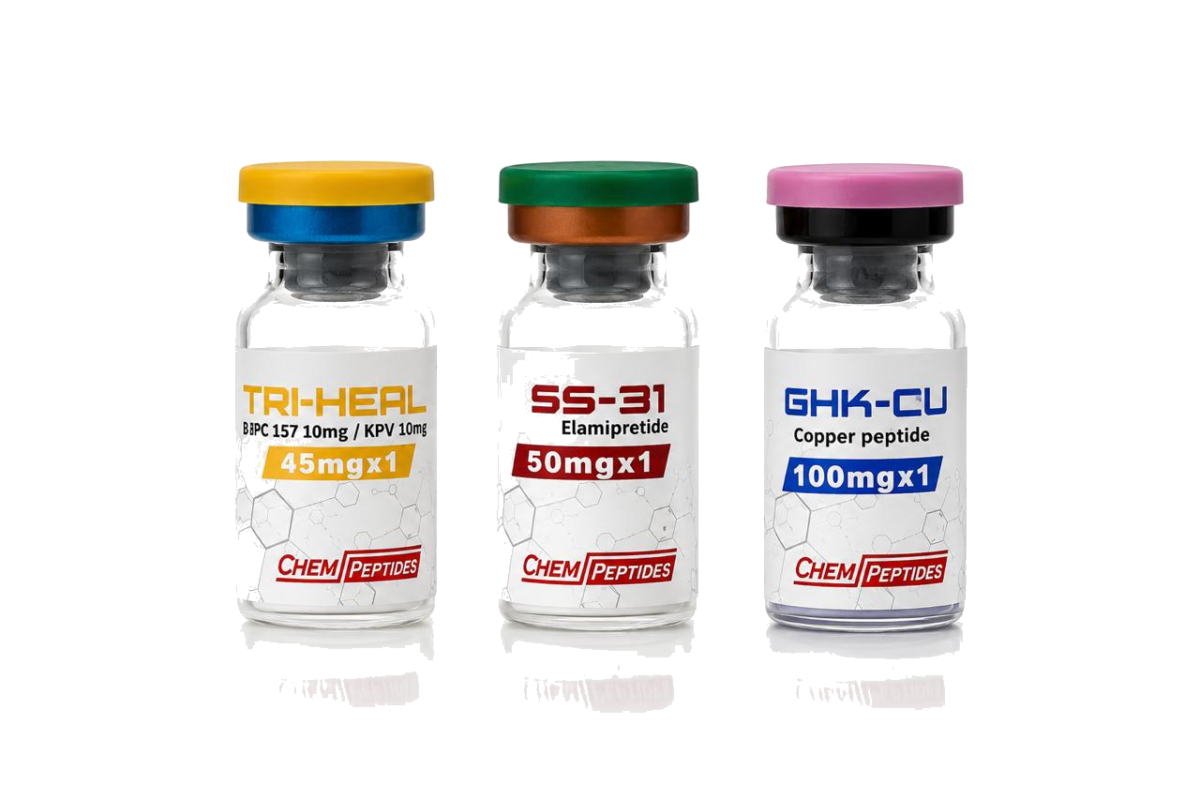
GHK-Cu is een tripeptide-kopercomplex (Gly-His-Lys gebonden aan Cu²⁺) dat in 1973 voor het eerst uit humaan plasma werd geïsoleerd. Ruim vijf decennia aan literatuur heeft het gepositioneerd als een van de meest onderzochte koperbindende peptiden in dermaal en wondherstelonderzoek. Deze review brengt de mechanistische lijnen in kaart die telkens terugkeren in het GHK-Cu-corpus.
Structuur en kopercoördinatie
Het tripeptide Gly-His-Lys bindt Cu²⁺ met hoge affiniteit via het imidazoolstikstof van histidine en aangrenzende backbone-atomen. Het complex fungeert als een fysiologische koperdrager: het is de vorm waarin koper onder normale omstandigheden in en tussen cellen wordt getransporteerd, en de vorm die fibroblasten en keratinocyten aan het membraan herkennen.
Plasmadaling met de leeftijd
De endogene GHK-Cu-plasmaconcentratie daalt van ongeveer 200 ng/mL bij jongvolwassenen tot ~80 ng/mL rond het 60e levensjaar (Pickart, 2008). Deze daling is een van de meest geciteerde beweegredenen voor exogeen onderzoek, met de hypothese dat het aanvullen van de uitgeputte drager de fibroblastfunctie in ouder weefsel herstelt.
Fibroblastmodulatie
GHK-Cu verhoogt de activiteit van dermale fibroblasten in onderzoeksmodellen. De literatuur rapporteert:
- Verhoogde synthese van type I-collageen
- Verhoogde expressie van decorine en elastine
- Verhoogde synthese van glycosaminoglycanen (hyaluronzuur, dermatansulfaat)
- Gestimuleerde fibroblastproliferatie in vitro bij lage nanomolaire concentraties
Het effect op ECM-componenten vormt de basis voor het begrip “remodellering” in de onderzoeksliteratuur: GHK-Cu stimuleert niet alleen de matrixproductie, maar beïnvloedt ook de matrixsamenstelling.
Regulatie van matrixmetalloproteïnasen
Een onderscheidend kenmerk van GHK-Cu is de bidirectionele MMP-modulatie. Het peptide verhoogt de expressie van MMP-2 en induceert tegelijkertijd weefselremmers van metalloproteïnasen (TIMP-1, TIMP-2). Het netto-effect is gecontroleerde remodellering in plaats van ongecontroleerde afbraak, een patroon dat GHK-Cu onderscheidt van niet-fysiologische MMP-activatoren.
Wondgenezingsmodellen
Knaagdiermodellen met volledige-dikte wonden en varkensmodellen met excisiewonden rapporteren versnelde sluiting en verbeterde weefselarchitectuur bij toediening van GHK-Cu (Maquart et al., 1993). Het mechanisme lijkt multifactorieel: angiogenese, fibroblastrekrutering, een verschuiving naar ontstekingsremmende cytokines en ECM-remodellering dragen allemaal bij. Differentiatie ten opzichte van naïef littekenweefsel wordt histologisch waargenomen: betere collageenorganisatie en verlaagde fibrosemarkers.
Haarfollikelonderzoek
GHK-Cu is onderzocht als follikel-stimulerend middel in knaagdier- en ex vivo humane hoofdhuidmodellen. Gerapporteerde mechanismen omvatten stimulatie van dermale papilcellen en modulatie van folliculaire keratinocyten. De klinische vertaling van dit onderzoek blijft beperkt, maar het in-vitrosignaal is consistent.
Ontstekingsremmend en antioxidant profiel
Het kopercentrum verleent antioxidantactiviteit: GHK-Cu vangt hydroxylradicalen weg en verlaagt markers van oxidatieve schade in huidonderzoeksmodellen. Het peptide dempt ook de afgifte van pro-inflammatoire cytokines (TNF-α, IL-1β) in dermale fibroblasten onder stress.
Genexpressieprofilering
Microarray-studies hebben gerapporteerd dat GHK-Cu de expressie moduleert van meer dan 4.000 genen in humane dermale fibroblasten (Pickart et al., 2014), met een patroon dat ECM-, antioxidantverdedigings- en cellulaire herstelroutes omvat. De breedte is ongebruikelijk en blijft mechanisme-onderzoek aandrijven.
Stabiliteit en reconstitutie
GHK-Cu wordt geleverd als een gelyofiliseerd, blauw getint poeder (de kleur is het kopercomplex). Reconstitutie in bacteriostatisch water bij 1 tot 2 mg/mL is gangbaar voor stabiliteitsstudies. Het kopercentrum is gevoelig voor reducerende omstandigheden: vermijd reducerende middelen in reconstitutiebuffers. Gekoelde gereconstitueerde GHK-Cu behoudt de potentie gedurende ongeveer 4 weken.
Openstaande onderzoeksvragen
- Vergelijkende biobeschikbaarheid van GHK-Cu tegenover vrij GHK-peptide
- Langetermijn-receptoradaptatie bij chronische blootstelling
- Vertaling van sterke in-vitrosignalen naar klinische wondgenezingsuitkomsten
Chempeptides levert HPLC-geverifieerde GHK-Cu met batch-CoA, zie de onderzoekscatalogus voor de actuele beschikbaarheid.
Alleen voor onderzoeksdoeleinden. De hierboven samengevatte literatuur is preklinisch tenzij anders vermeld.
Gerelateerd onderzoek
- GHK-Cu en BPC-157 bij huid- en weefselherstelonderzoek: een mechanistisch overzicht
- BPC-157 onderzoeksreview: mechanismen en weefselherstelliteratuur
- BPC-157 tegenover TB-500: vergelijking van weefselherstelmechanismen
- BPC-157 voor weefselherstel onderzoek: complete gids voor research grade peptide
- TB-500: een literatuurreview over weefselherstelmechanismen
Research disclaimer▾
Alle informatie op deze pagina is bedoeld voor laboratoriumonderzoek en in-vitro studies. Geen humane consumptie. Geen medische claims. Producten zijn niet goedgekeurd door EMA of FDA voor therapeutisch gebruik.
Onderzoeksmateriaal bij dit onderwerp
De peptiden die in huid- en collageenonderzoek het meest worden gebruikt:
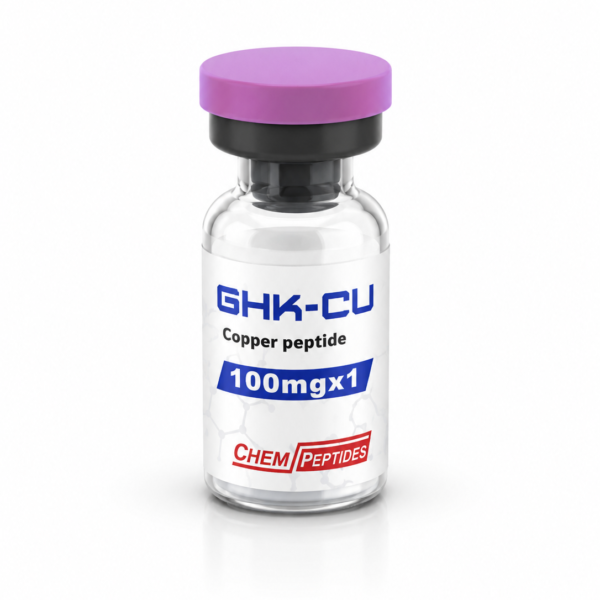 GHK-Cu 100mg€ 90,00
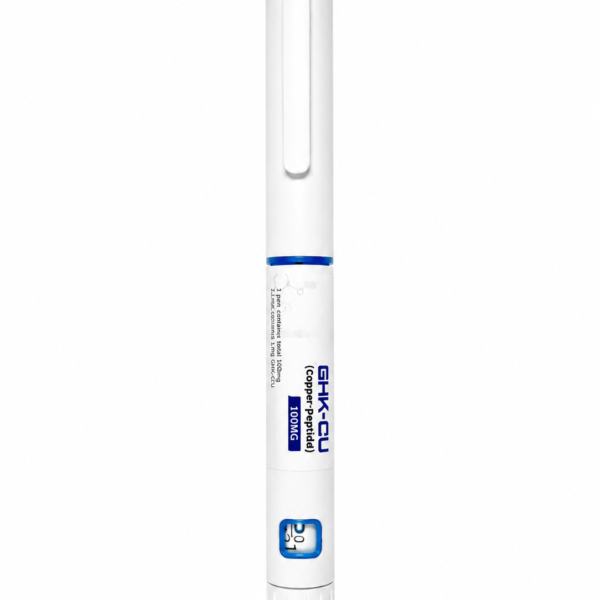 GHK-Cu 100mg Pre-filled Pen€ 110,00
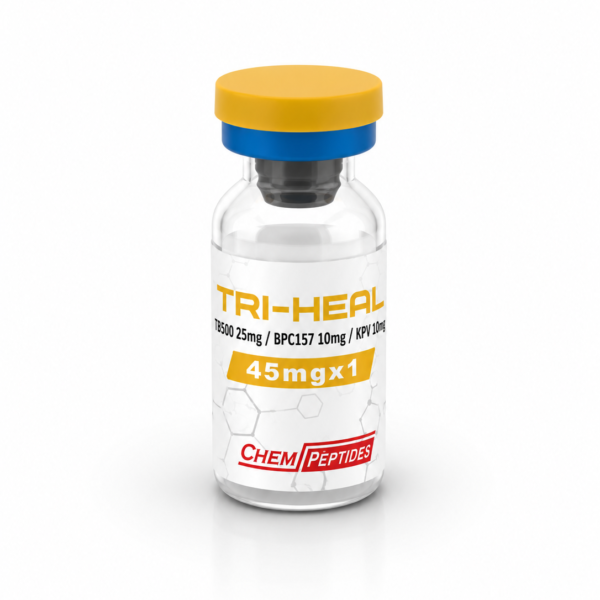 Tri-Heal TB-500 + BPC-157 + KPV 25/10/10mg€ 140,00
Betalen met iDEAL of Wero. Verzending in discrete verpakking vanuit Nederland. Uitsluitend voor laboratorium- en onderzoeksdoeleinden.